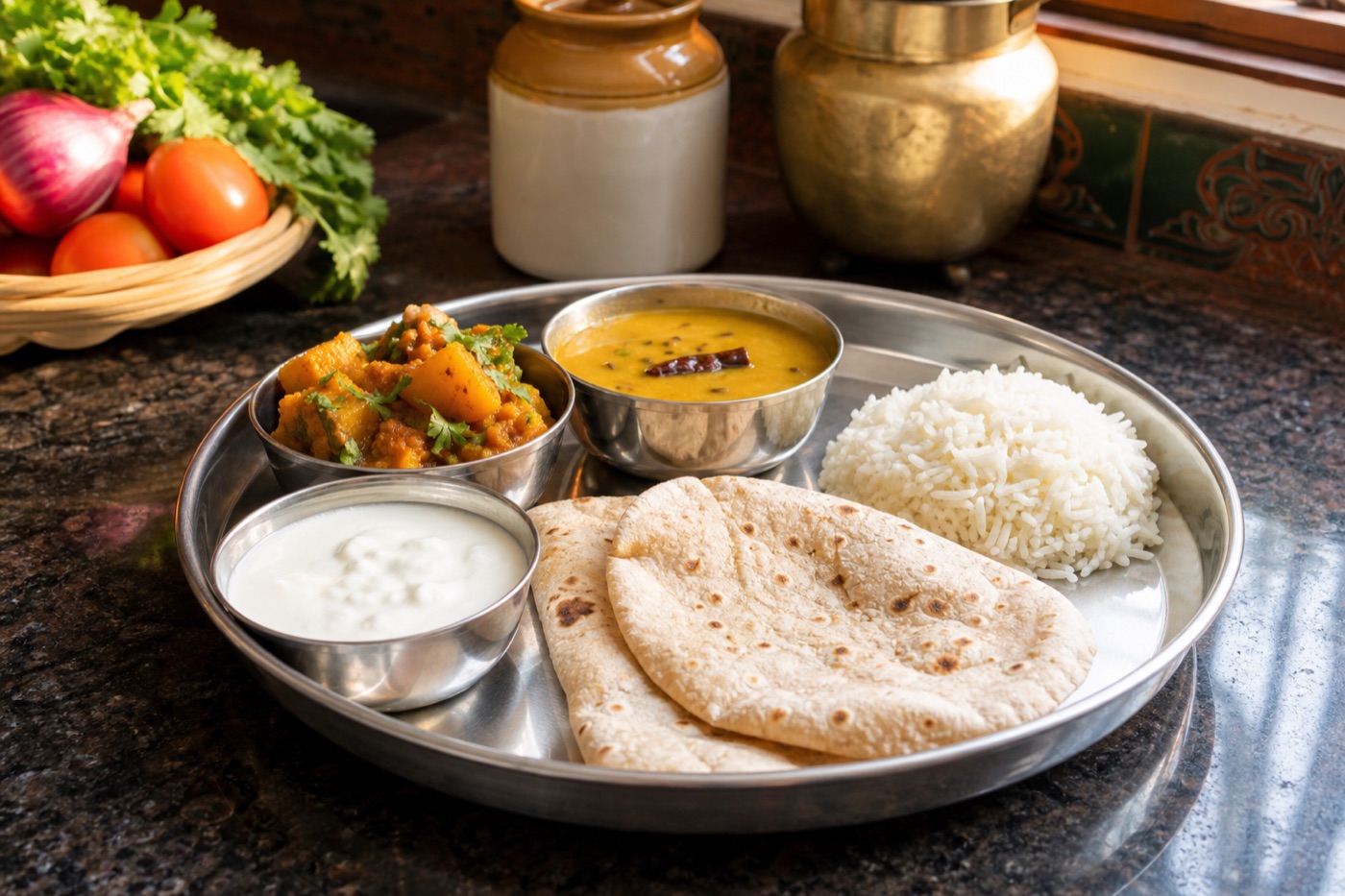
How many calories do Indians need a day?
ICMR-NIN puts a sedentary Indian man at about 2,100 kcal a day and a sedentary woman near 1,650. Activity, body size and life stage shift these figures.
ICMR-NIN puts a sedentary Indian man at about 2,100 kcal a day and a sedentary woman near 1,650. Activity, body size and life stage shift these figures.
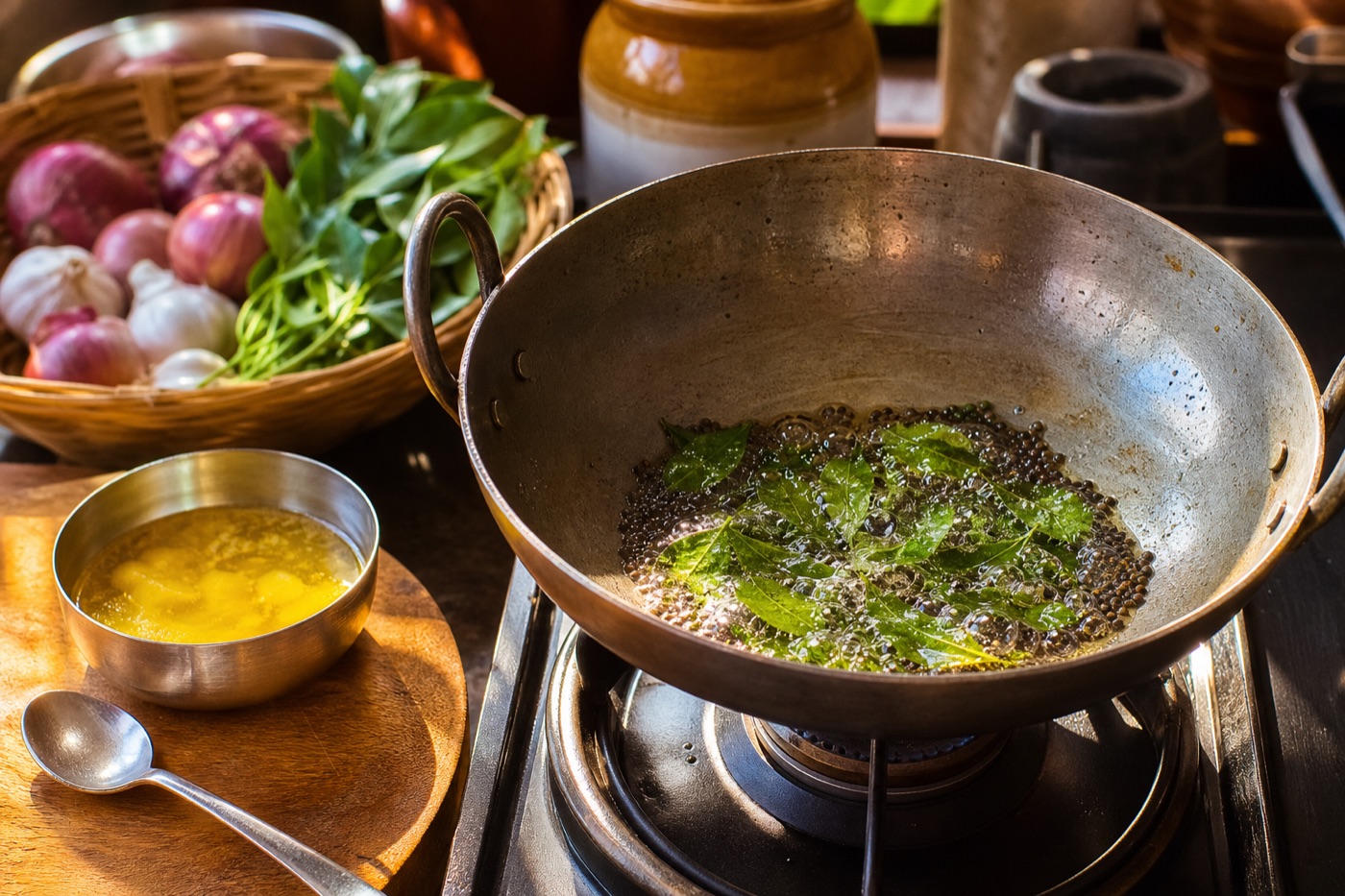
Each teaspoon of oil or ghee adds about 40–45 kcal. See how many teaspoons common Indian dishes hold, what ICMR-NIN advises and easy ways to use less.
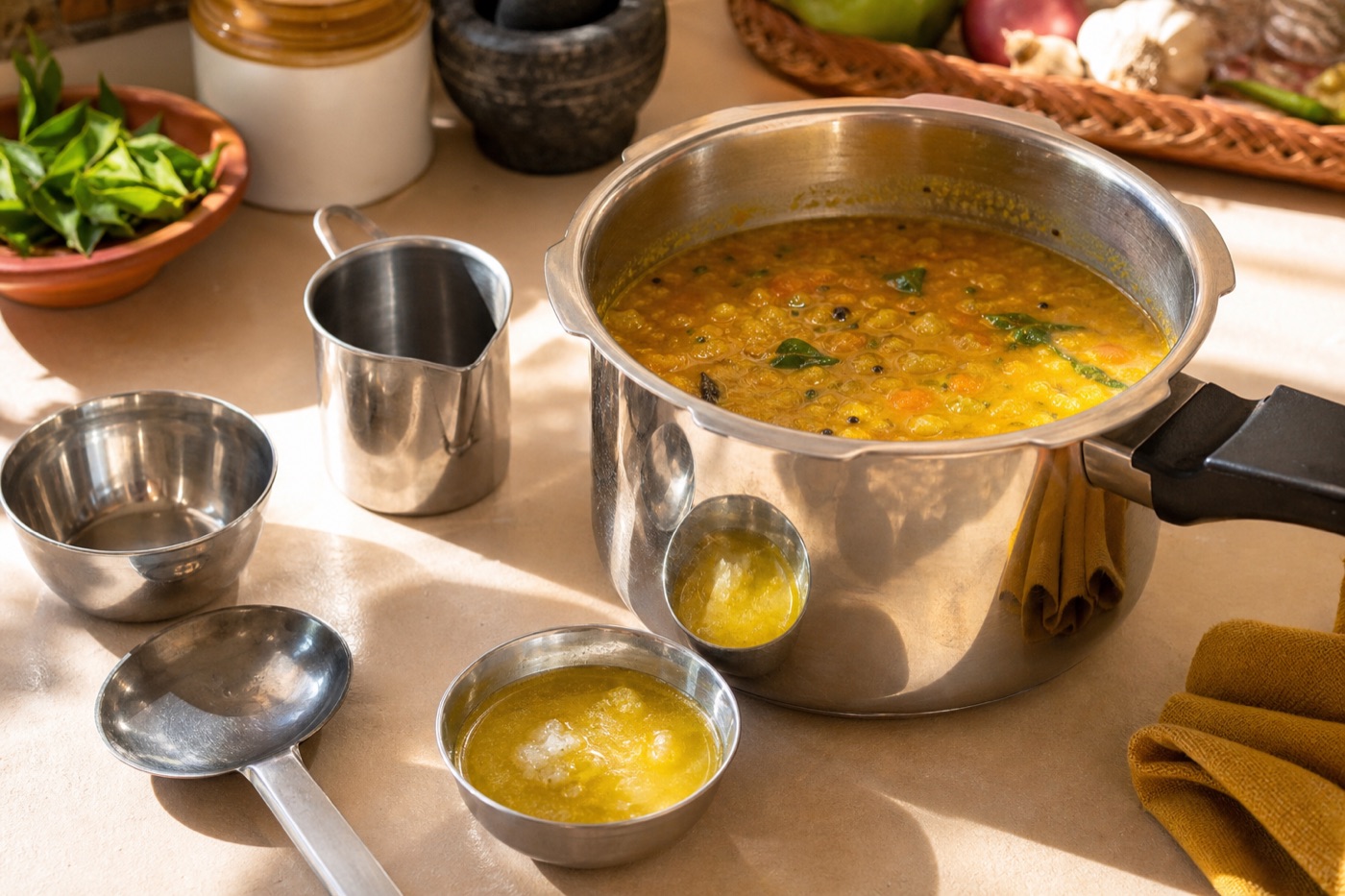
To count calories in home-cooked Indian food, measure your katori and ladle once, weigh raw ingredients for the pot, and track ghee and oil separately.
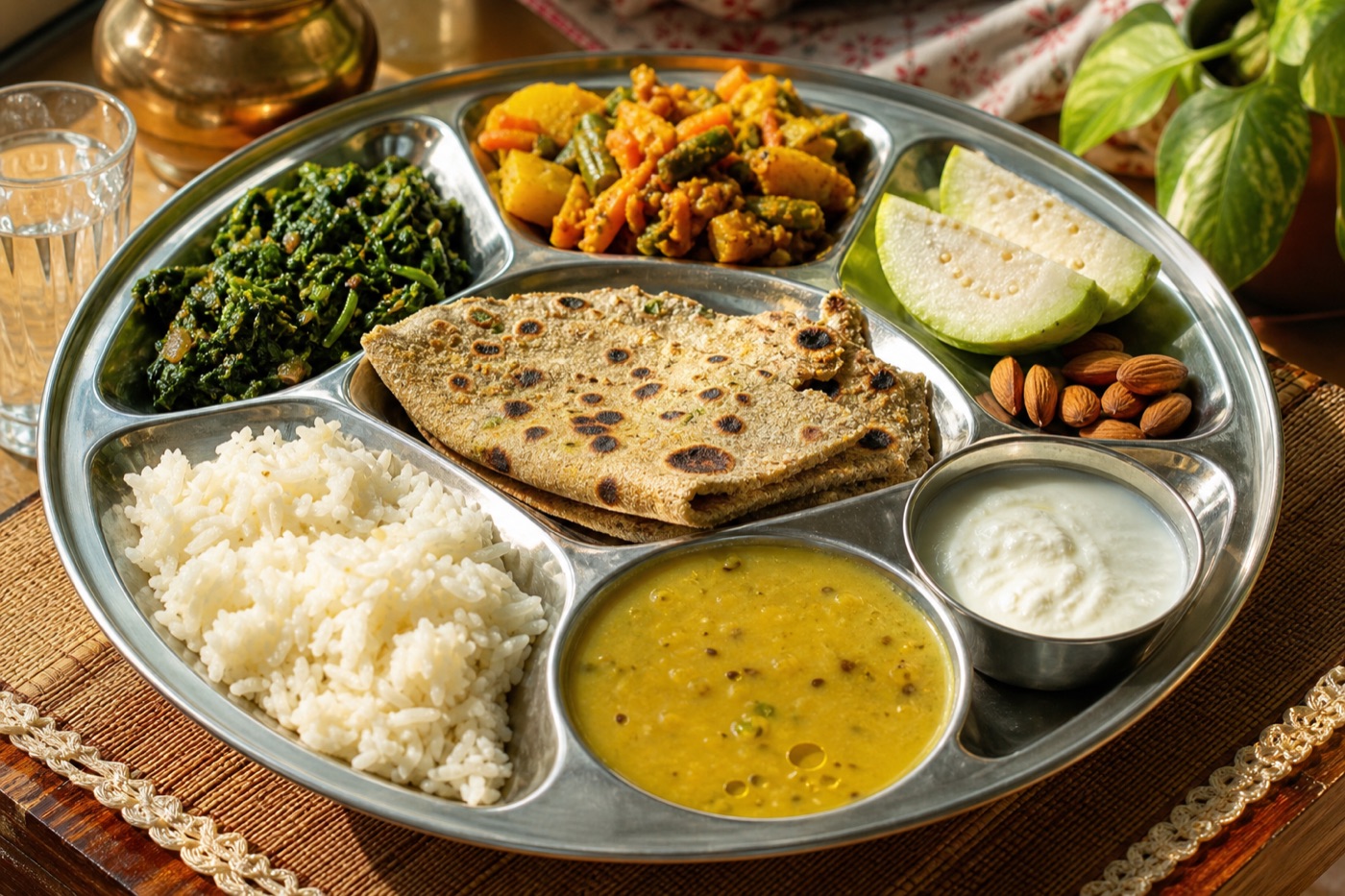
ICMR-NIN's My Plate for the Day splits a 2,000 kcal diet into food groups, with vegetables and fruit filling half the plate. Here's how it looks at home.
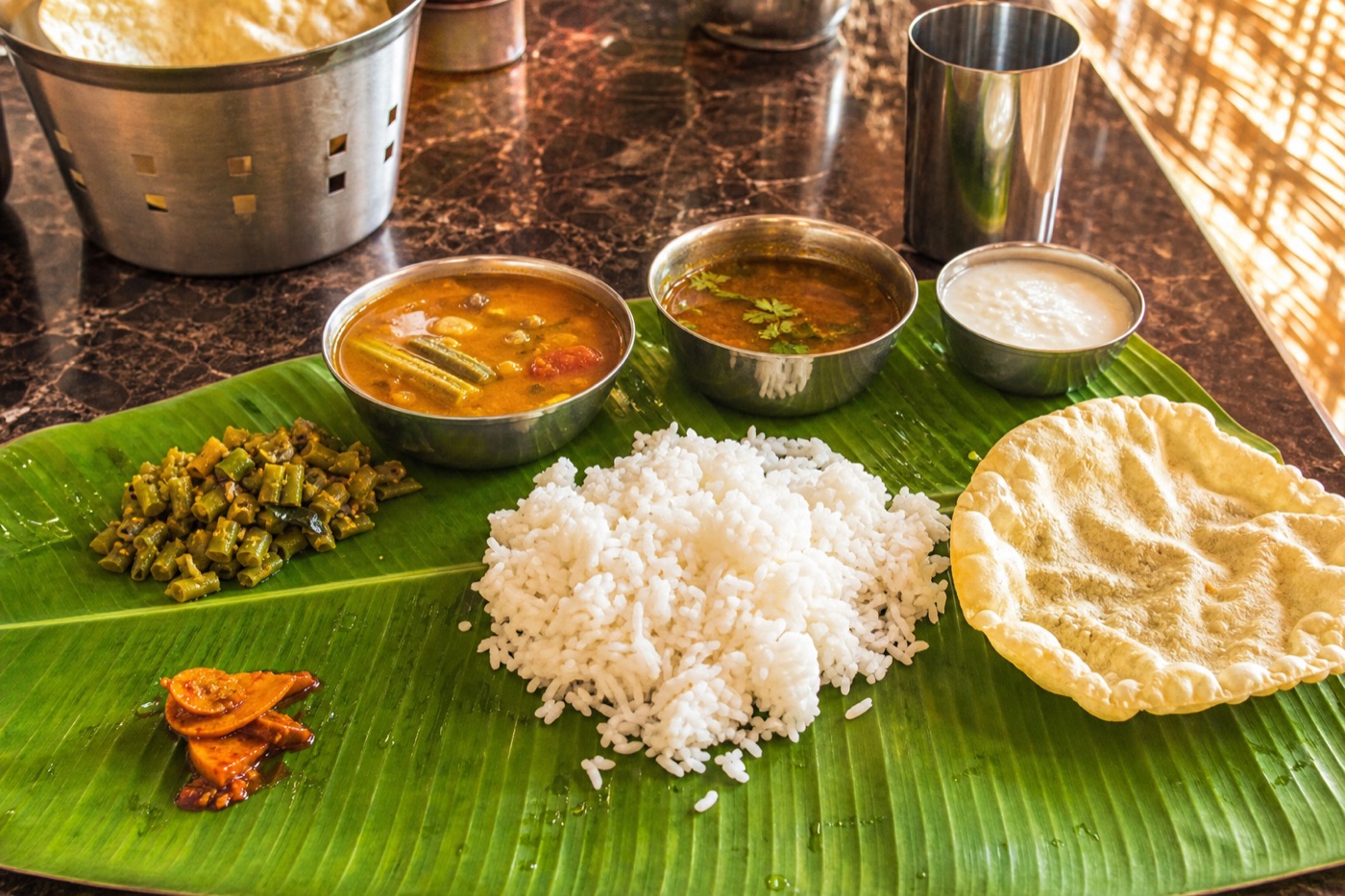
A South Indian meals plate of rice, sambar, rasam, poriyal, curd and appalam is about 700–950 kcal, and unlimited meals can pass 1,300. See each item.
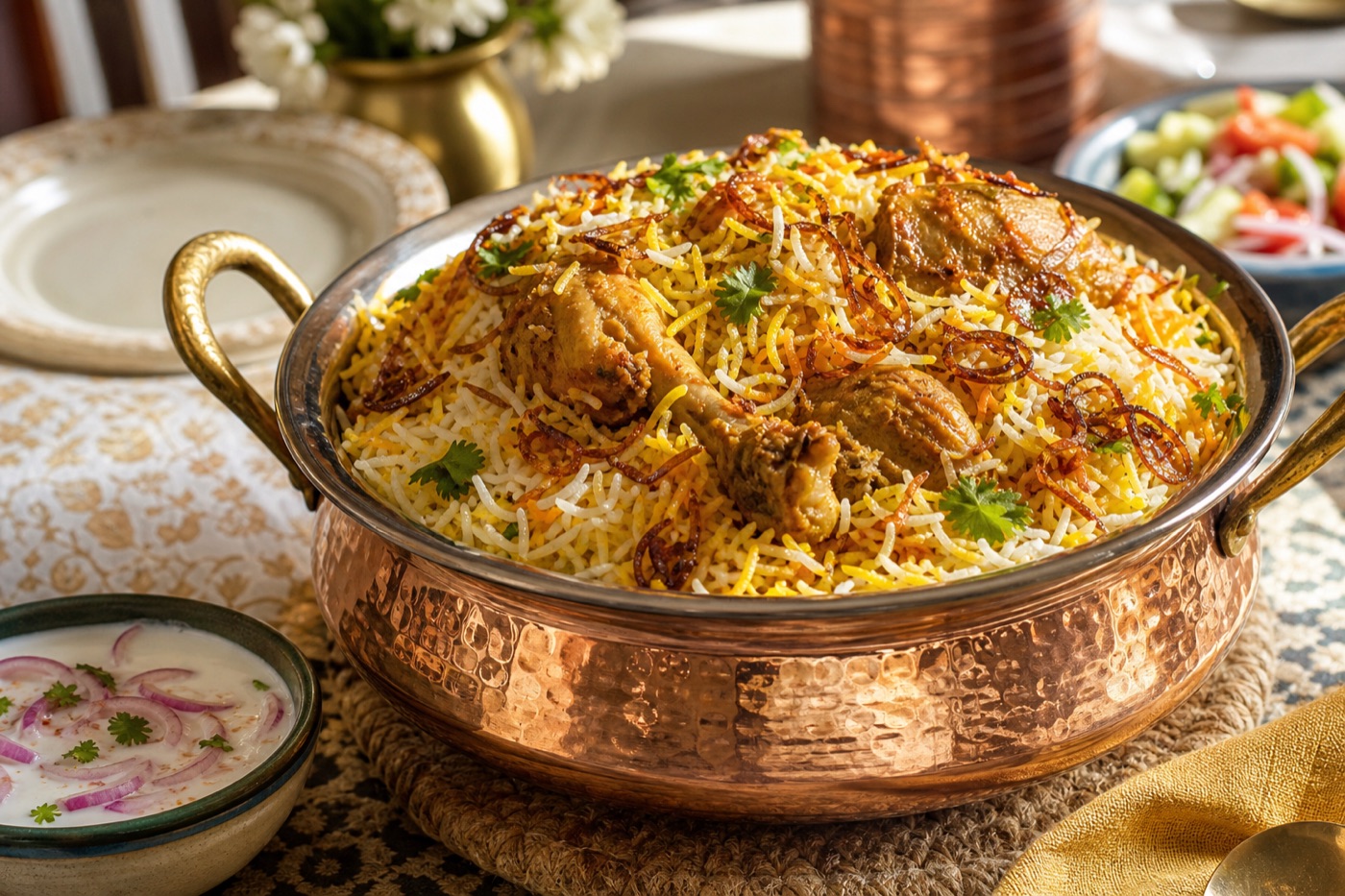
A plate of veg biryani has about 350–500 kcal, chicken biryani 450–700 and mutton 550–800. See why it varies, plus raita and salan, and lighter ways to eat it.
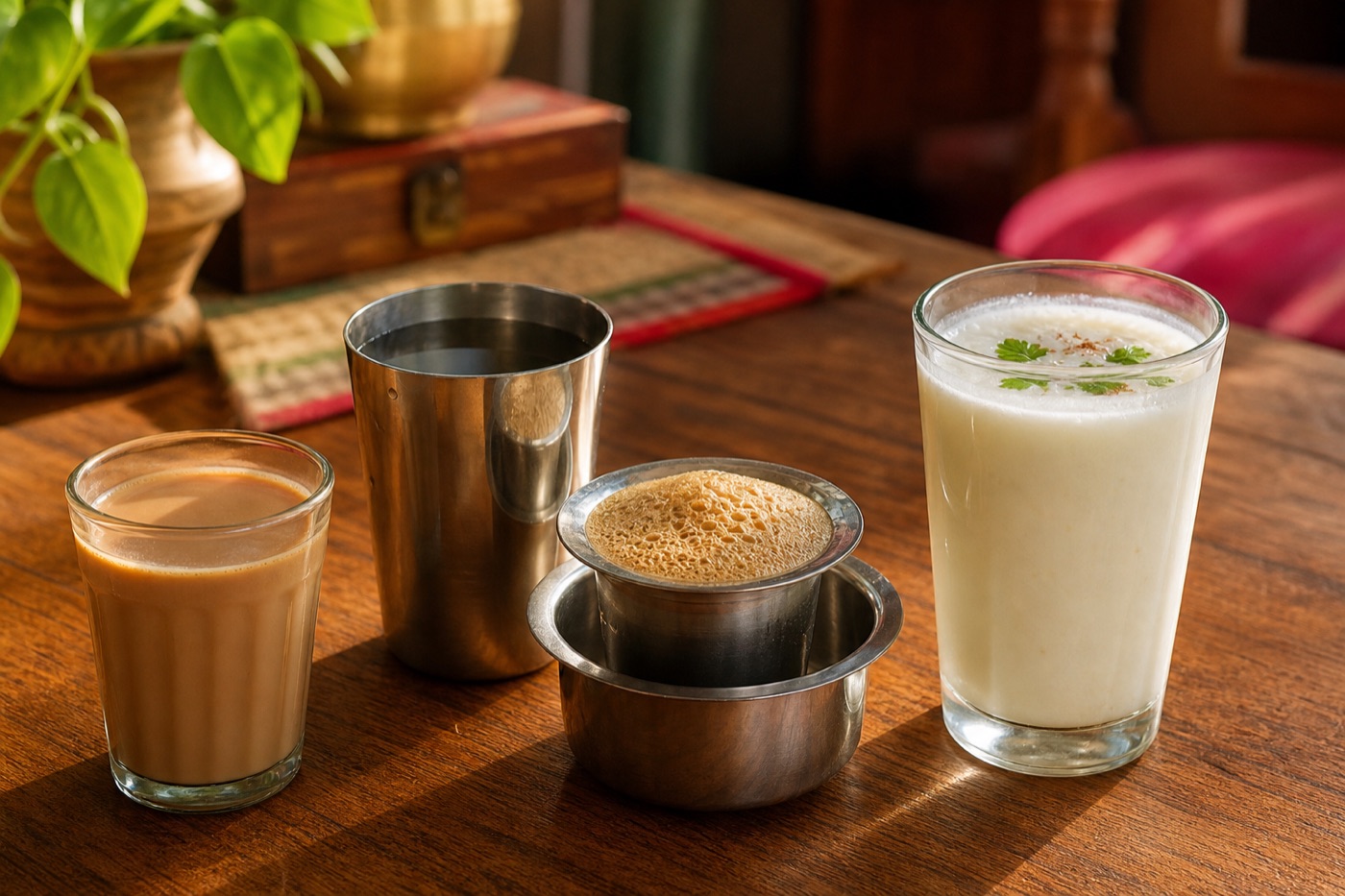
A cup of chai with milk and two teaspoons of sugar has about 70–100 kcal, filter coffee about 90–130 and a glass of sweet lassi 200–300. Here's the breakdown.
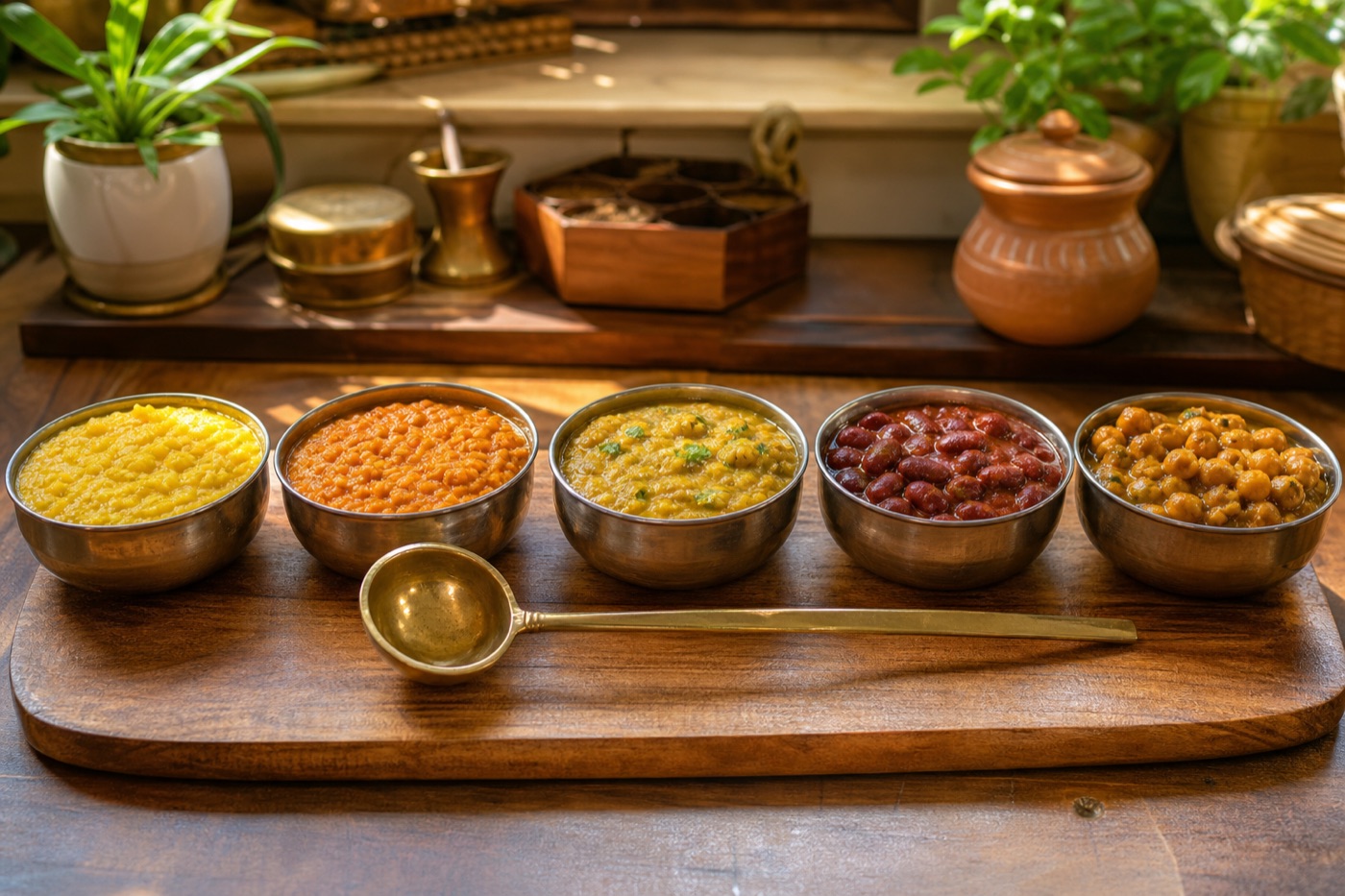
A katori of home-style dal has roughly 120–180 kcal and 7–10 g protein. Compare moong, masoor, toor, urad, rajma and chole, plus how the tadka changes it.
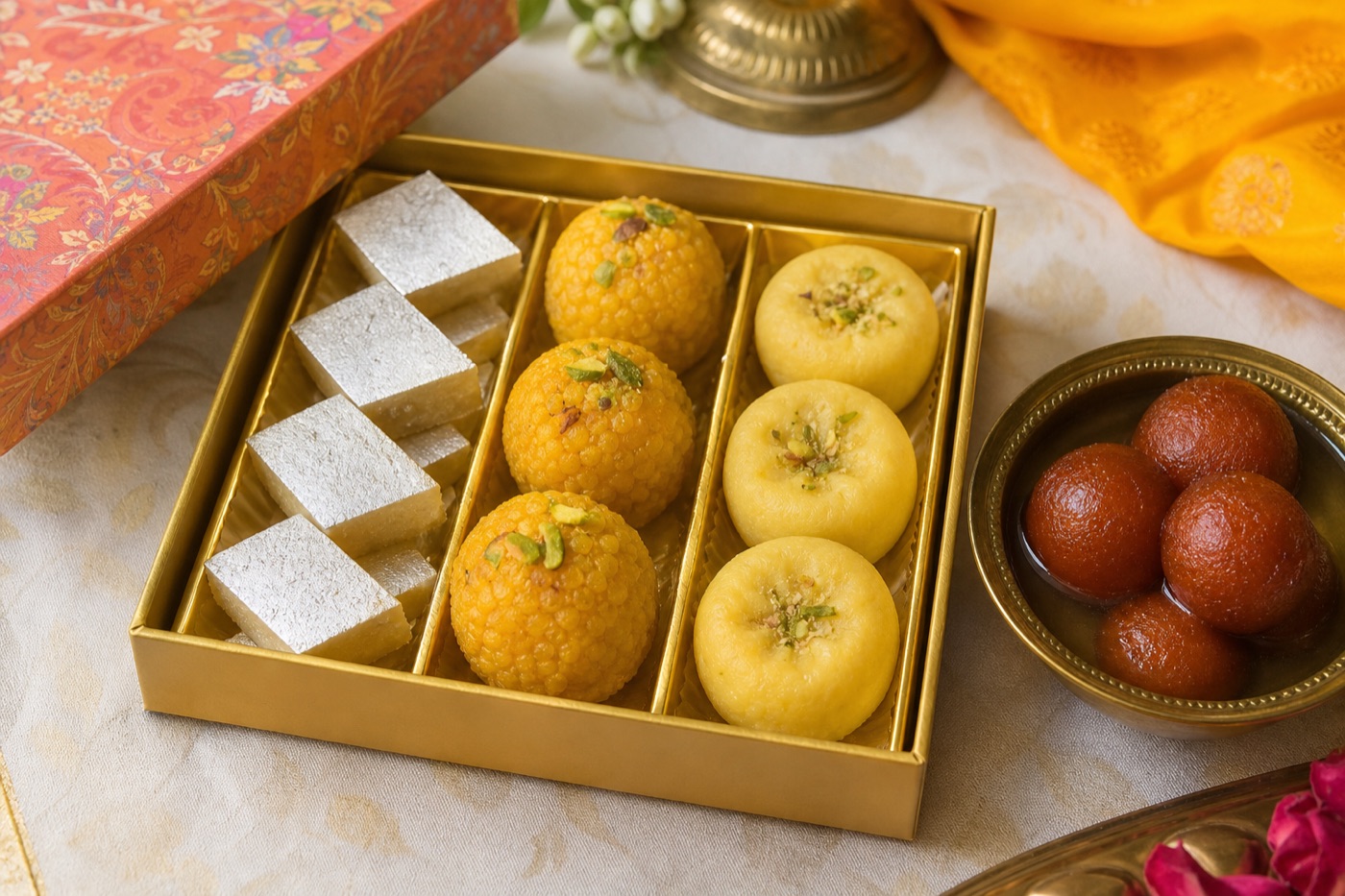
A gulab jamun has about 140–180 kcal, a jalebi coil 100–150, a besan ladoo 150–200 and a kaju katli piece 60–90. Compare popular mithai, plus festive tips.
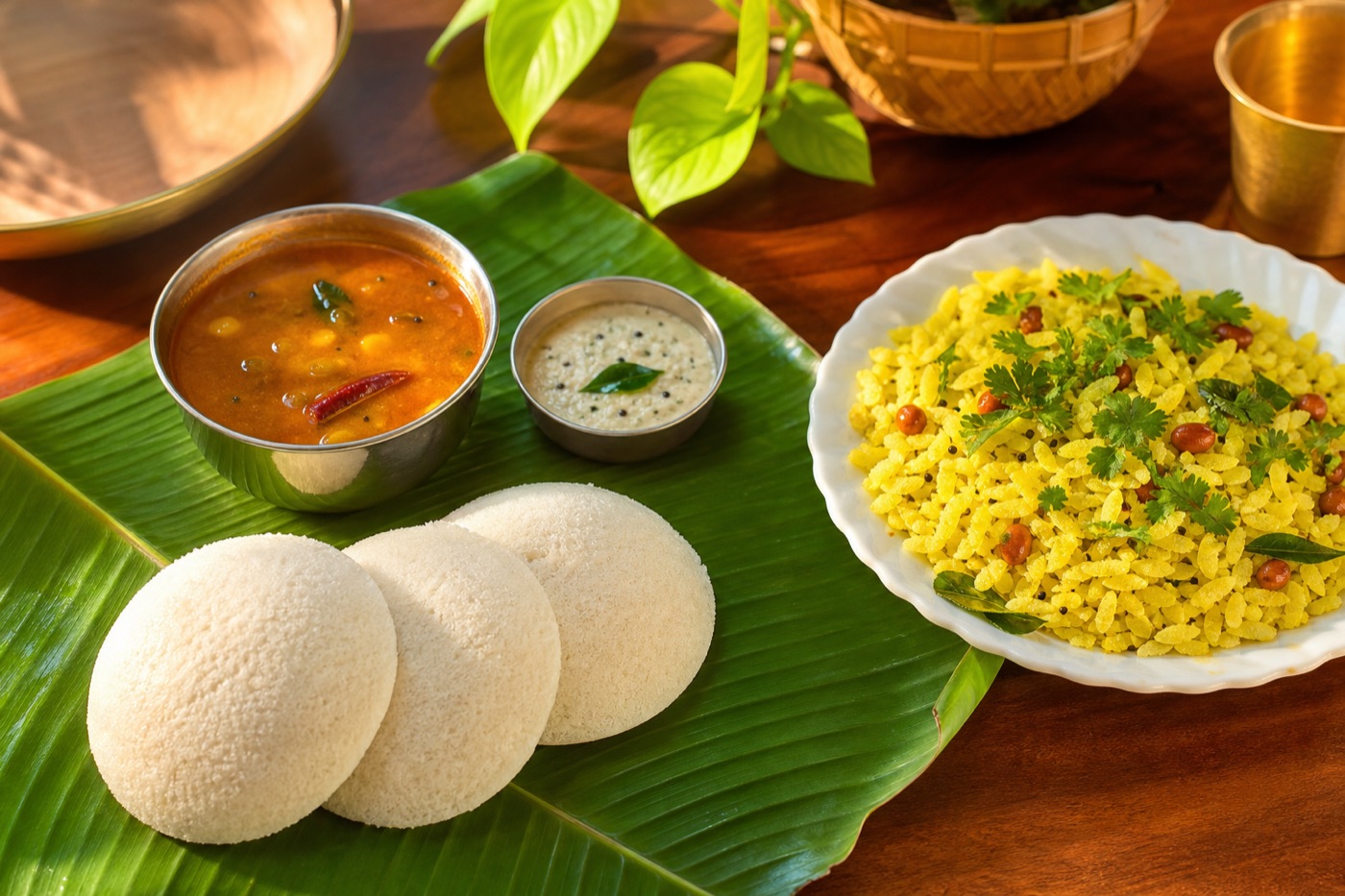
Three idlis with sambar come to about 300–450 kcal, a plate of poha or upma about 200–300, and an aloo paratha 250–350. Compare popular Indian breakfasts.
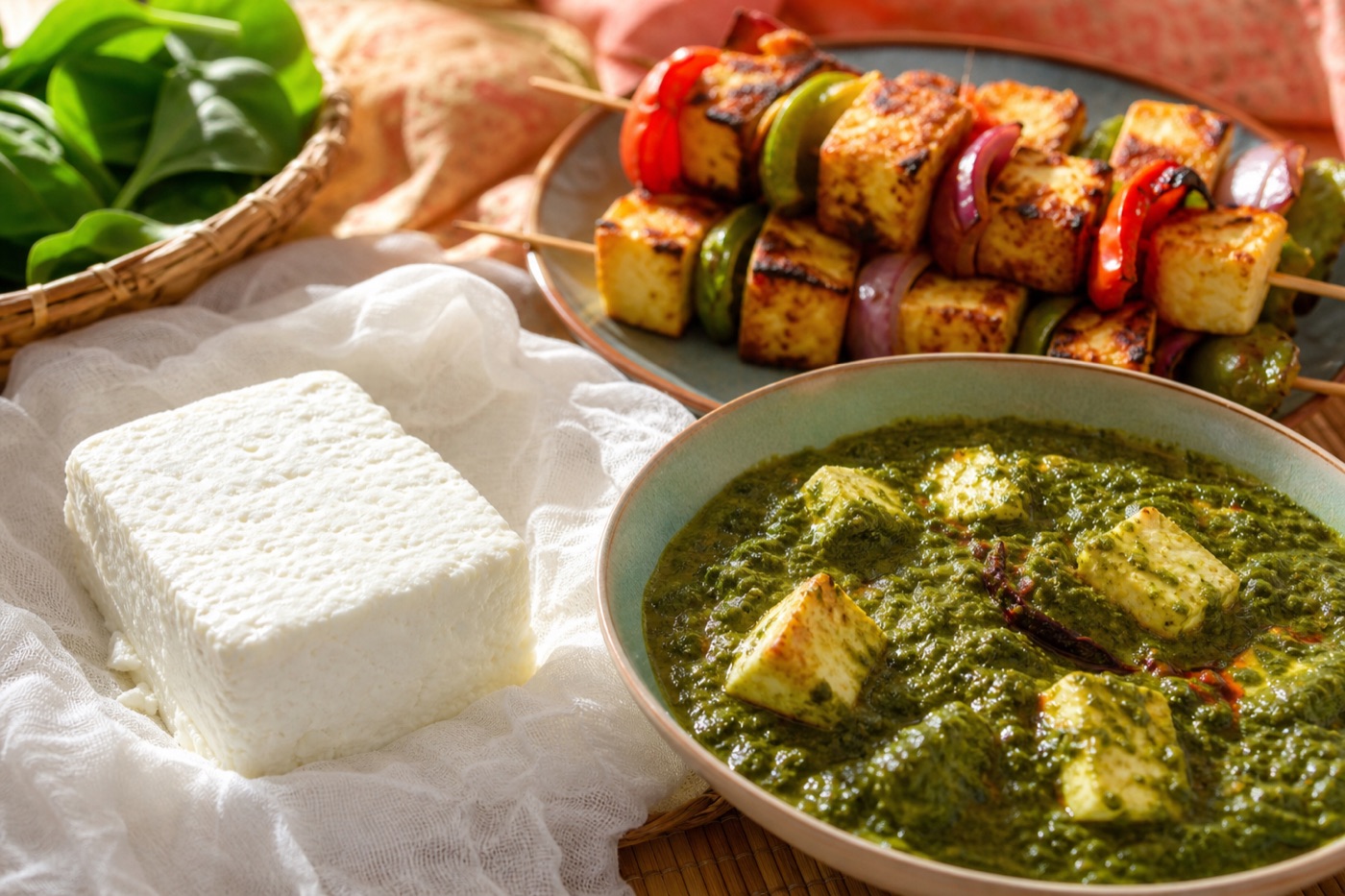
Full-fat paneer has roughly 250–300 kcal and 18–20 g protein per 100 g. Here's what that means for palak paneer, tikka, bhurji and paneer butter masala.
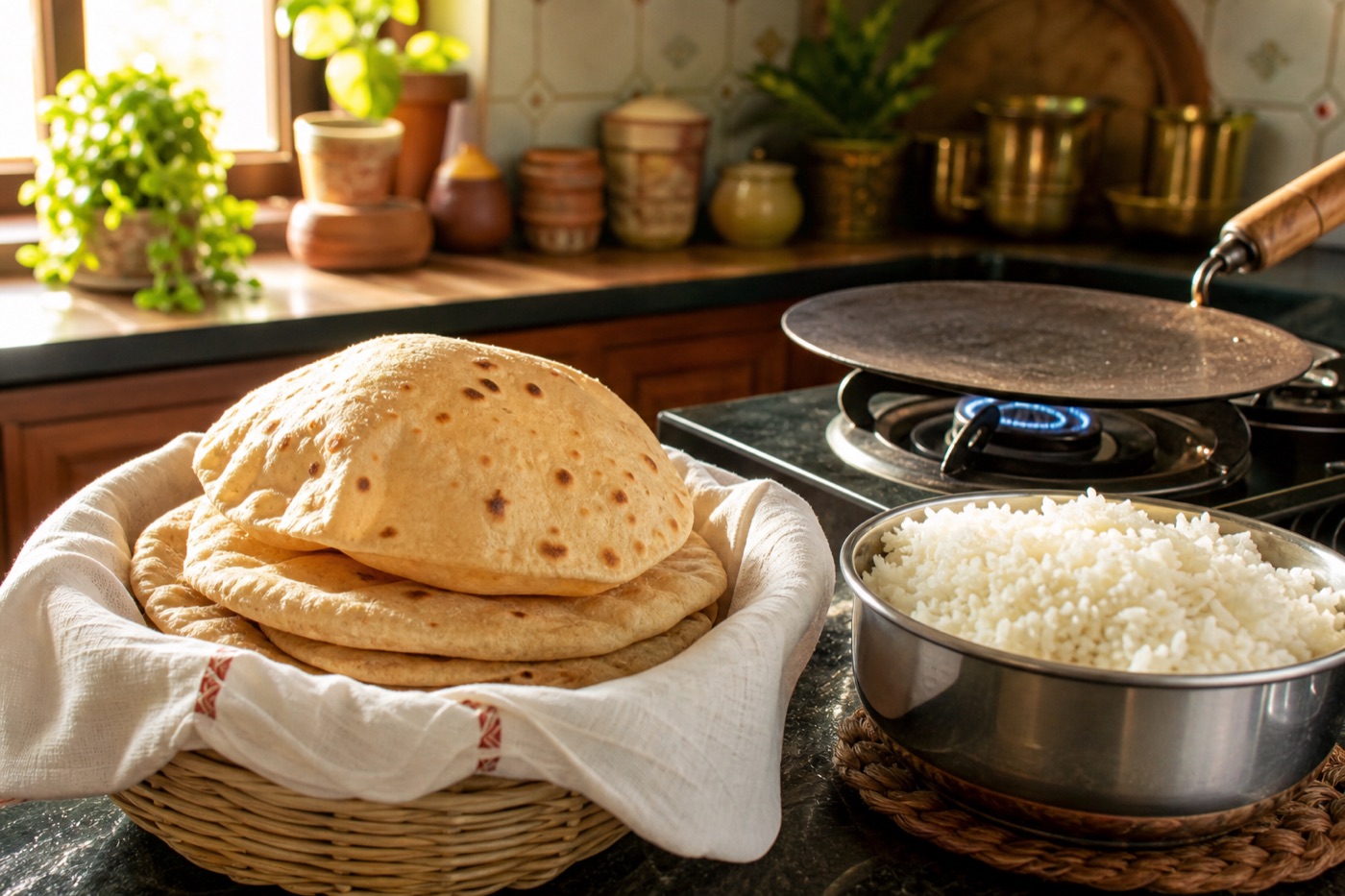
A plain phulka has about 80–100 kcal and a katori of cooked rice about 180–210. Here are rough calories for roti, chapati, paratha, puri, naan and rice dishes.
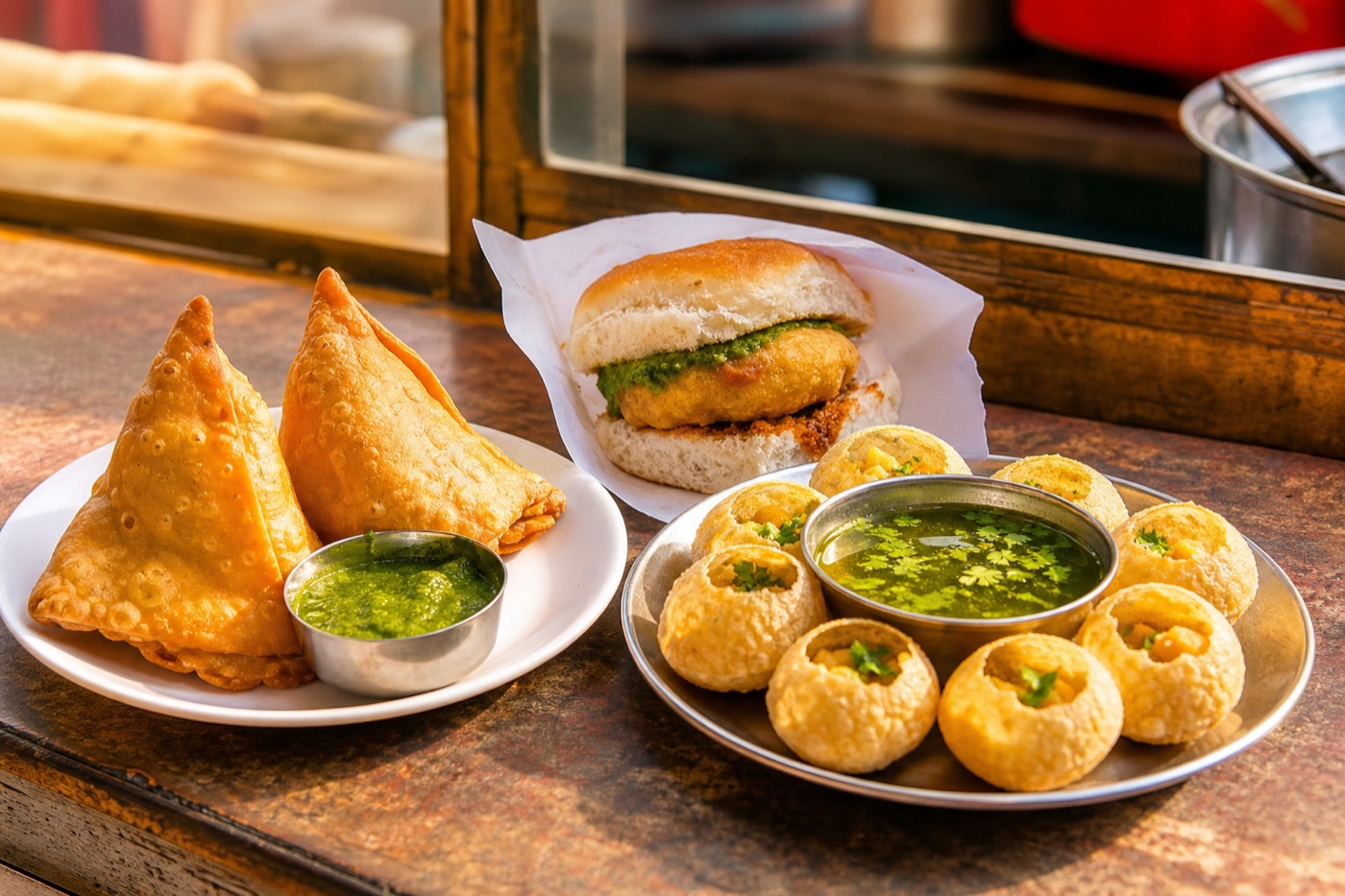
A samosa has about 250–320 kcal, a vada pav 280–350 and six pani puris 150–220. Street snack calories, from chaat to momos, with lighter picks.
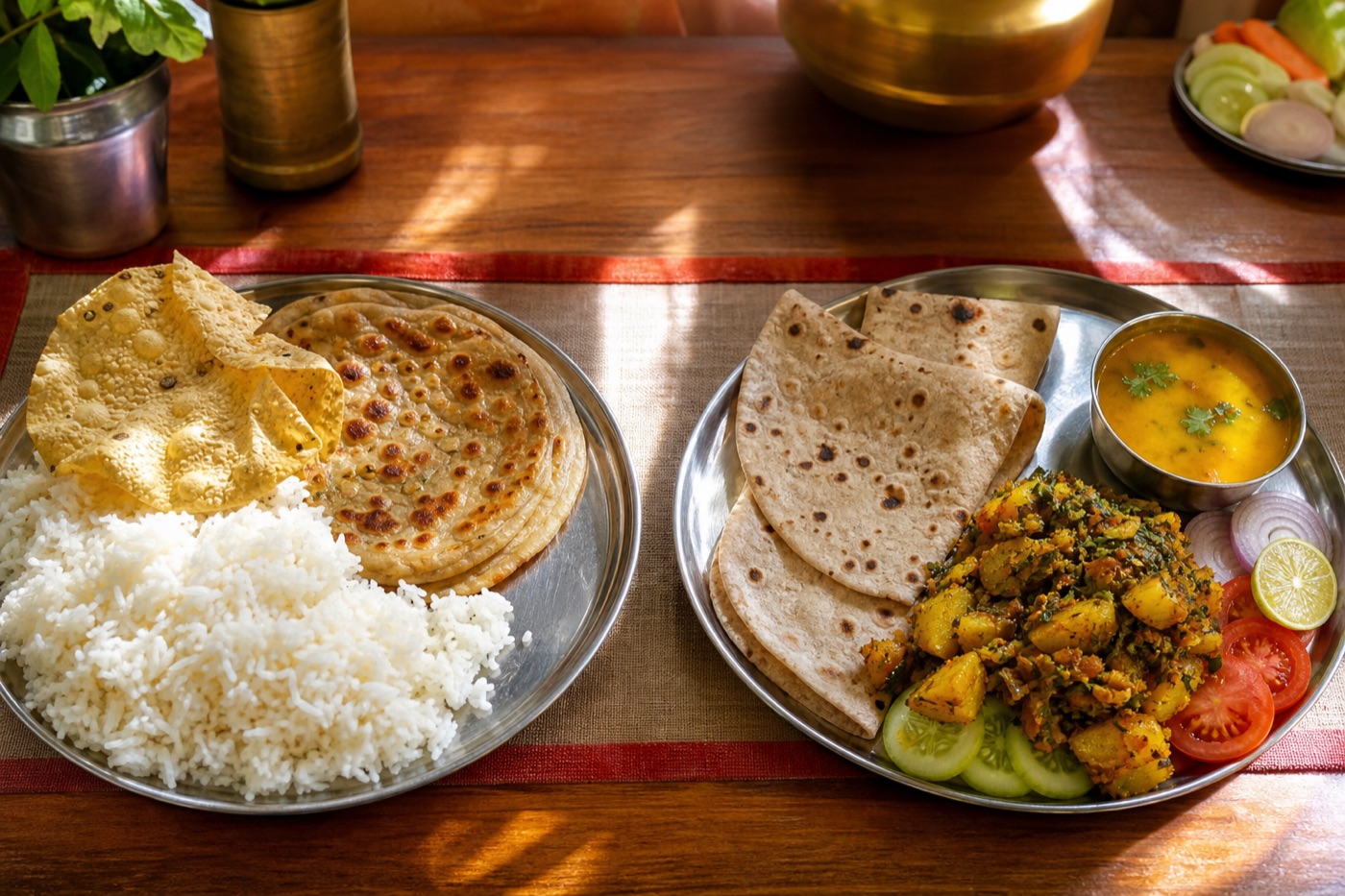
A calorie deficit means eating less than you burn. For most Indian adults, trimming 300–500 kcal a day from rice, rotis, oil and snacks is enough to start.
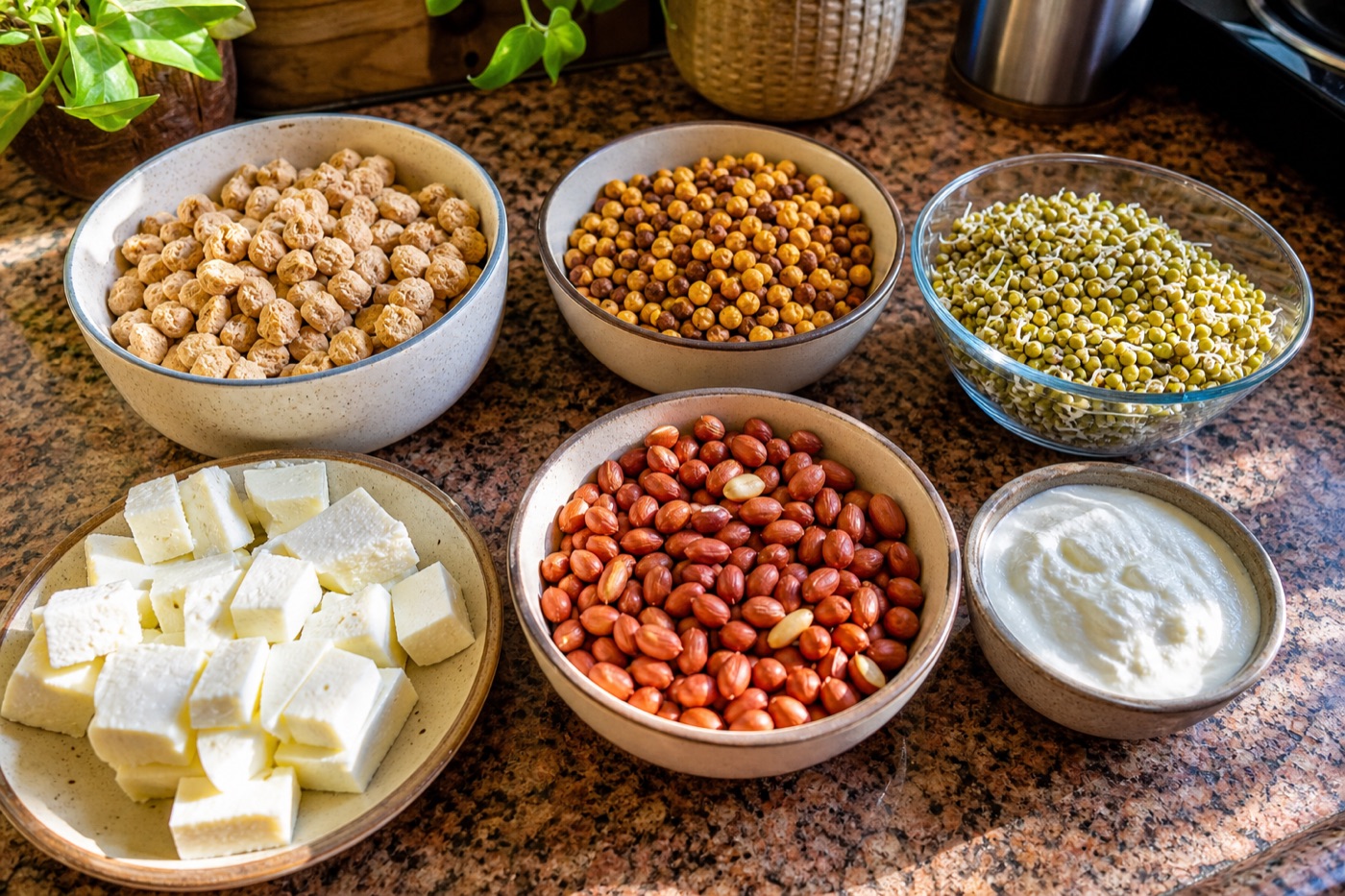
Soya chunks, paneer, dals, chana, sattu, peanuts, curd and tofu are top vegetarian protein sources in India. Grams per 100 g and per katori, plus a sample day.
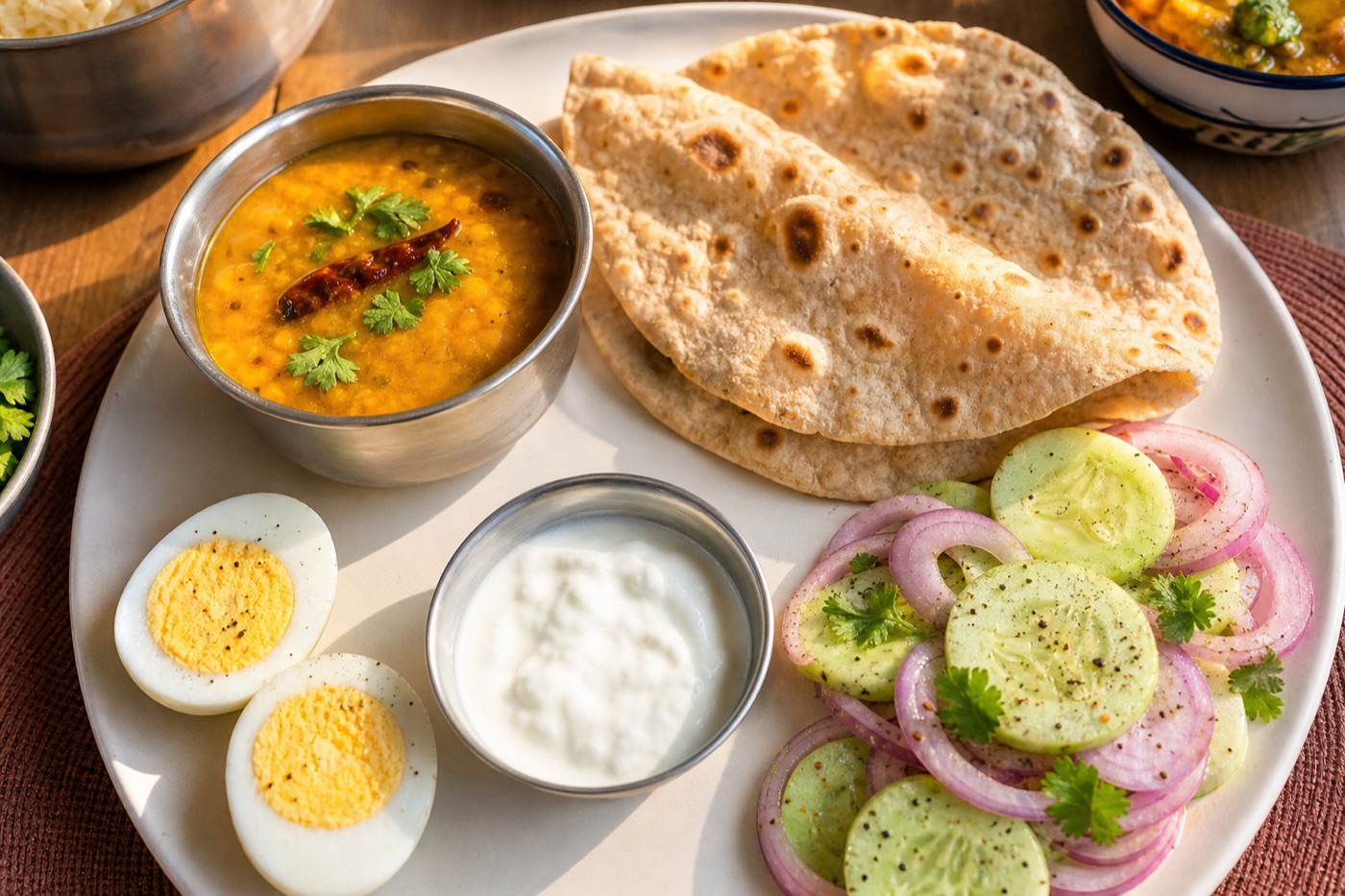
ICMR-NIN advises about 0.83 g of protein per kg of body weight a day, around 54 g for a 65 kg man and 46 g for a 55 kg woman. Here's how to meet it.