Calories in a South Indian meals plate
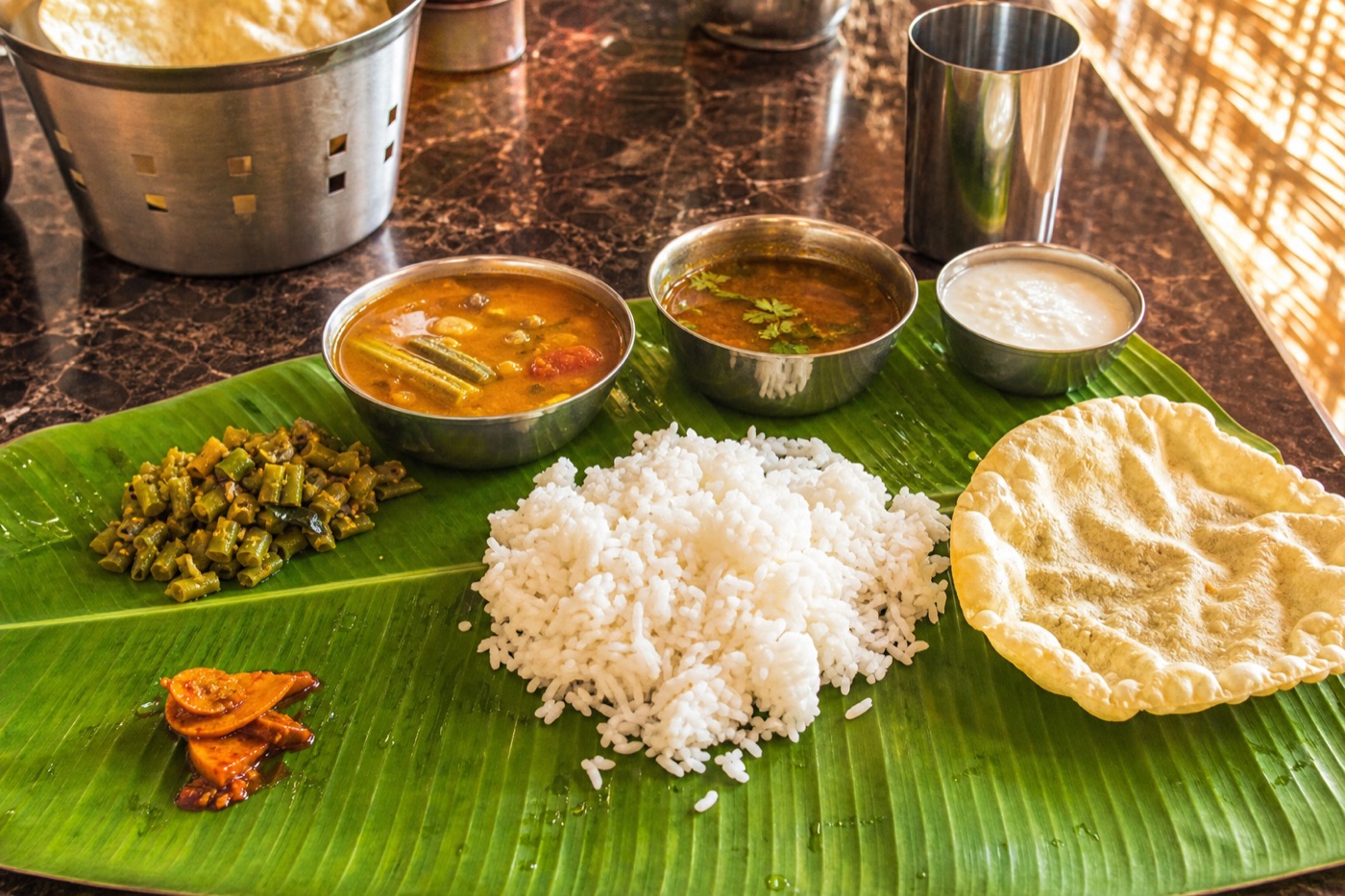
A South Indian meals plate of rice, sambar, rasam, poriyal, curd and appalam is about 700–950 kcal, and unlimited meals can pass 1,300. See each item.
- What is on the leaf
- Rice decides the total
- Four regional plates, added up
- Where the protein comes from
- A lighter leaf in seven steps
- The bottom line
A standard South Indian “meals” plate of rice, sambar, rasam, one vegetable poriyal, curd, an appalam and a little pickle usually comes to roughly 700–950 kcal at a restaurant, and nearer 550–750 kcal at home, where rice is served in measured katoris. Unlimited “full meals”, with second and third helpings of rice, a spoon of ghee, payasam and banana chips, can go well past 1,300 kcal. Rice is the single biggest item on the leaf; coconut, oil, ghee and fried extras account for most of the rest.
Treat the numbers below as rough guides. They draw on typical restaurant and home recipes and on composition values in ICMR-NIN’s Indian Food Composition Tables (IFCT 2017), so your own leaf may sit higher or lower.
What is on the leaf
| Item | Usual serving | Approx. calories |
|---|---|---|
| Cooked white rice | 1 medium katori (about 150 g) | 180–210 kcal |
| Sambar | 1 katori | 100–150 kcal |
| Rasam | 1 katori | 30–60 kcal |
| Kara or vatha kuzhambu | ½–1 katori | 80–150 kcal |
| Poriyal or thoran with coconut | 1 small katori | 80–150 kcal |
| Kootu | 1 small katori | 100–160 kcal |
| Avial | 1 small katori | 120–200 kcal |
| Curd | 1 small katori | 60–100 kcal |
| Buttermilk (moru, majjige) | 1 glass | 30–50 kcal |
| Appalam or pappadam, fried | 1 medium | 40–70 kcal |
| Pickle | 1 teaspoon | 15–30 kcal |
| Ghee on rice | 1 teaspoon | about 45 kcal |
| Podi with ghee | 1 tablespoon podi + 1 teaspoon ghee | 70–100 kcal |
| Payasam | 1 small cup | 150–250 kcal |
| Banana chips | a small handful (about 20 g) | 100–120 kcal |
Rasam and buttermilk are the lightest things on the leaf. Coconut-rich dishes such as avial and thoran, and anything cooked in plenty of gingelly or coconut oil, sit towards the top of their ranges.
Rice decides the total
Cooked white rice gives roughly 120–140 kcal per 100 g. At home, one and a half katoris is a common lunch portion, at about 270–315 kcal. Restaurants tend to start with a generous mound, often close to two katoris, and the server comes round again for the sambar course, the rasam course and the curd course. Three or four helpings across the meal means 540–840 kcal from rice alone.
Red matta, ponni and sona masoori rice are all similar in calories once cooked. If you want more on the plate, the cheapest calories to add are vegetables, not more rice. Our guide to calories in roti and rice compares rice with chapati, paratha and millets.
Four regional plates, added up
Tamil Nadu meals
Rice with sambar, kara kuzhambu, rasam, a poriyal, a kootu, curd, appalam and pickle adds up to roughly 850–1,300 kcal, depending on how many rounds of rice you accept. A small sweet at the end adds another 150–250.
Andhra meals
Andhra plates often begin with rice mixed with podi and ghee, followed by pappu with more ghee, a fried vegetable curry, pulusu, pachadi and curd. With the generous rice servings that are typical, a full plate commonly reaches 1,000–1,400 kcal.
Karnataka oota
Rice with huli, saaru, palya, kosambari, curd and payasa comes to roughly 850–1,200 kcal. Kosambari, a salad of soaked moong dal with cucumber or carrot, is one of the lightest and most protein-friendly items on any South Indian leaf.
Kerala sadya
A festive sadya serves small portions of many dishes: matta rice with parippu and ghee, sambar, avial, thoran, olan, erissery, kalan, pachadi, pappadam, banana chips, sharkara varatti and at least two payasams. Adding up typical servings gives roughly 1,500–2,200 kcal. It is a celebration meal, eaten a few times a year, and that is how it is best treated.
Where the protein comes from
A meals plate is mostly cereal. Rice, sambar, kootu, curd and appalam together supply roughly 18–25 g of protein, which is reasonable for one meal but often lower than people assume for such a large plate. The sambar and kootu carry most of it, thanks to toor and moong dal; our guide to calories in dal has the details for each pulse.
ICMR-NIN’s Dietary Guidelines for Indians (2024) encourage plates where vegetables and pulses take up more space and cereals less. On a meals leaf that simply means a second katori of sambar or kootu, a portion of kosambari or sundal, or an egg, fish or chicken curry in place of the third round of rice. The My Plate for the Day explainer shows the full-day picture.
A lighter leaf in seven steps
- Ask for a smaller first serving of rice, and stop after one more round at most.
- Take the vegetables first, and ask for a refill of poriyal or kootu instead of more rice.
- Mix rice with sambar or rasam generously, so a smaller portion still feels like a full meal.
- Limit ghee to one teaspoon, or leave it out on weekdays.
- Keep to one appalam, and choose roasted over fried when you have the option.
- Share the payasam, or take a few spoons rather than the whole cup.
- Finish with buttermilk rather than a heaped round of curd rice.
Pickle, appalam, podi and kuzhambu are also salty. The WHO recommends less than 5 g of salt a day for adults, and a full meals plate can eat up much of that allowance, so a teaspoon of pickle rather than a generous scoop helps. If you have diabetes, high blood pressure or kidney disease, a doctor or registered dietitian can suggest how much rice and salt suits you.
The bottom line
A South Indian meals plate is a well-rounded lunch when the rice is kept to one or two servings and the sambar, rasam, kootu and vegetables are allowed to fill the leaf. The calories climb with every extra round of rice, every spoon of ghee and every fried or sweet side. Enjoy the full meals and the festive sadya on special days, and keep weekday plates simpler.
Frequently asked questions
Is a South Indian meals plate healthy?
It can be nicely balanced: sambar, kootu and curd bring protein, and the vegetable dishes add fibre. The weak spots are the large rice portion, the fried extras and the salty pickle, so trimming those makes the plate much lighter.
How many calories are in curd rice?
A medium katori of curd rice is about 200–260 kcal, depending on the curd and the tempering. Eaten as the last course after rice and sambar, it quietly adds another full serving of rice to the meal.
Is red matta rice lower in calories than white rice?
Not really. Cooked matta rice and white rice are similar per katori. Matta keeps more of the bran, so it gives a little more fibre and some minerals, but the size of the serving still matters most.
What is the lightest thing to choose at a meals counter?
Rasam, sambar, poriyal and kosambari are relatively light, especially with a single serving of rice. Payasam, fried appalam, banana chips and extra ghee are the items that add up fastest.