Calories in idli, dosa, poha, upma and paratha
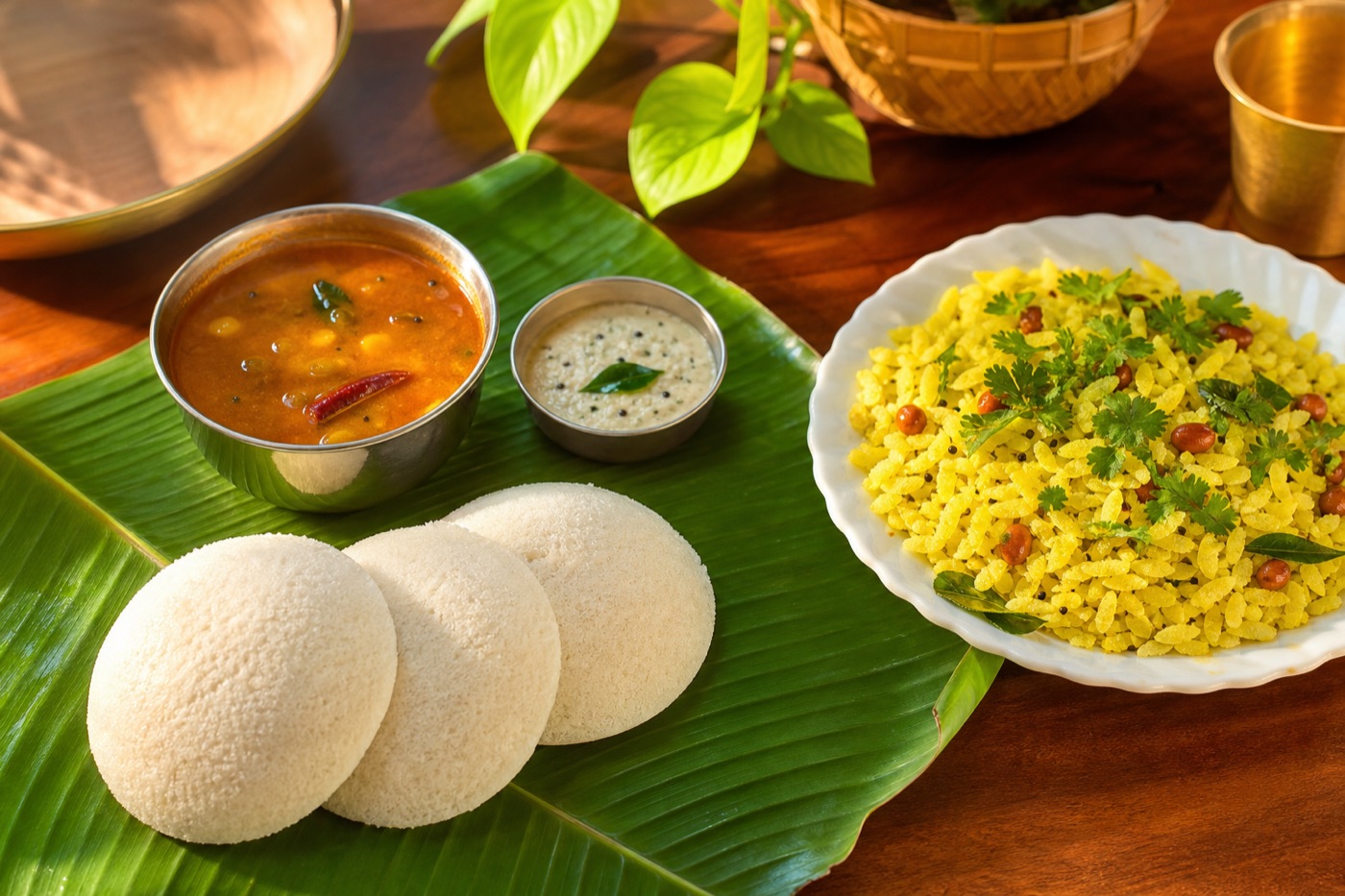
Three idlis with sambar come to about 300–450 kcal, a plate of poha or upma about 200–300, and an aloo paratha 250–350. Compare popular Indian breakfasts.
- South Indian breakfasts
- West and North Indian breakfasts
- Comparing three everyday breakfasts
- How to build a more filling breakfast
- The bottom line
One medium idli has about 55–75 kcal, so a typical plate of three idlis with a katori of sambar and a little coconut chutney lands around 300–450 kcal. A plain dosa is roughly 120–170 kcal, a masala dosa 250–400 kcal, a plate of poha or upma about 200–300 kcal and an aloo paratha around 250–350 kcal before butter. Steamed dishes start light, while oil, ghee, coconut and fried sides are what push breakfast totals up.
Figures in this guide are approximate. They are based on typical home and canteen recipes and composition values in ICMR-NIN’s Indian Food Composition Tables.
South Indian breakfasts
Fermented rice-and-urad batters give South Indian breakfasts a head start: they are steamed or cooked on a tawa with relatively little fat.
| Dish | Portion | Approx. calories |
|---|---|---|
| Idli | 1 medium (40–50 g) | 55–75 kcal |
| Rava idli | 1 medium | 80–110 kcal |
| Plain dosa | 1 medium, little oil | 120–170 kcal |
| Ghee roast dosa | 1 large | 200–300 kcal |
| Masala dosa | 1 restaurant-size | 250–400 kcal |
| Uttapam with onion and tomato | 1 medium | 200–300 kcal |
| Pesarattu (green moong dosa) | 1 medium | 120–180 kcal |
| Medu vada | 1 piece, deep-fried | 120–180 kcal |
| Puttu | 1 cylinder (about 100 g) | 200–250 kcal |
| Sambar | 1 katori | 100–150 kcal |
| Coconut chutney | 2 tablespoons | 60–100 kcal |
A “mini tiffin” plate with two idlis, one vada, sambar and chutney can easily come to 400–580 kcal, mostly because of the vada and the chutney. Kerala’s puttu with a katori of kadala curry sits in a similar range, around 400–500 kcal.
West and North Indian breakfasts
- Poha with peanuts, 1 plate (about 150–200 g cooked): about 200–300 kcal
- Poha topped with sev: add about 50–100 kcal
- Upma, 1 plate: about 200–300 kcal
- Sabudana khichdi, 1 plate: about 350–450 kcal
- Methi thepla, 1 piece: about 100–140 kcal
- Besan chilla, 1 medium: about 120–180 kcal
- Khaman dhokla, 2 pieces: about 100–150 kcal
- Aloo paratha, 1 medium: about 250–350 kcal
- White butter on a paratha, 1 tablespoon: about 100 kcal
- Chole bhature, 1 plate: about 700–900 kcal
Sabudana khichdi is often thought of as light because it is a fasting food, but tapioca pearls, peanuts and ghee make it one of the more calorie-dense breakfasts. Chole bhature is a weekend treat, not a weekday breakfast.
Comparing three everyday breakfasts
Here is how three common Indian breakfasts add up, including the usual extras:
- Idli plate: 3 idlis, 1 katori sambar, 2 tablespoons coconut chutney, filter coffee with sugar. About 400–600 kcal, with moderate protein from the urad dal and sambar.
- Poha plate: 1 plate poha with peanuts and peas, a sprinkle of sev, a cup of chai. About 320–500 kcal, lighter on protein unless you add sprouts.
- Paratha plate: 2 aloo parathas cooked in ghee, 1 tablespoon white butter, a katori of curd, pickle and a cup of chai. About 800–1,050 kcal, enough for most of a sedentary person’s lunch as well.
If breakfast is your heaviest meal, that is perfectly fine, as long as lunch and dinner are lighter to match. For a sense of where these numbers sit within a full day, see our guide to how many calories Indians need.
How to build a more filling breakfast
Many traditional breakfasts are high in carbohydrate and quite low in protein. A few small changes help them keep you going longer:
- Add a pulse. Choose pesarattu, besan chilla or moong dal chilla, or add sprouts to poha.
- Add curd. A katori of curd alongside paratha, upma or poha adds protein and helps digestion.
- Add vegetables. Load upma and poha with peas, carrots, beans and onion; add grated vegetables to chilla batter.
- Watch the chutney. Coconut chutney is delicious but calorie-dense; use two spoons and top up on sambar instead.
- Choose steamed over fried. Swap the vada for an extra idli now and then.
- Measure the oil. A teaspoon is plenty for a family-size tawa of upma or poha.
For more protein-rich vegetarian ideas, our list of high-protein vegetarian Indian foods covers sprouts, paneer, curd and soya. Your morning drink counts too, so check our guide to calories in chai, filter coffee and lassi.
The bottom line
Indian breakfasts range from light steamed idlis and dhokla to heavy stuffed parathas and bhature. Most of the difference comes from oil, ghee, coconut and fried sides rather than the main dish itself. Choose steamed or tawa-cooked items on most days, add a pulse or curd for protein, and save butter-topped parathas and chole bhature for the occasional leisurely Sunday.
Frequently asked questions
Which Indian breakfast is lowest in calories?
Steamed options such as idli, dhokla and pesarattu, or a modest plate of poha or upma cooked with little oil, are usually the lightest. The sides matter too: sambar is light, while extra coconut chutney, sev and butter add up.
Is poha healthy for weight loss?
Poha can be a good choice if it is cooked with a measured amount of oil and plenty of vegetables. Adding sprouts, peas or a side of curd lifts the protein, which helps keep you full until lunch.
How can I make a paratha breakfast lighter?
Roll it slightly thinner, cook it with half a teaspoon of oil instead of a generous spoon of ghee, skip the butter on top and serve it with curd and a raw salad.