High-protein vegetarian Indian foods
Soya chunks, paneer, dals, chana, sattu, peanuts, curd and tofu are top vegetarian protein sources in India. Grams per 100 g and per katori, plus a sample day.
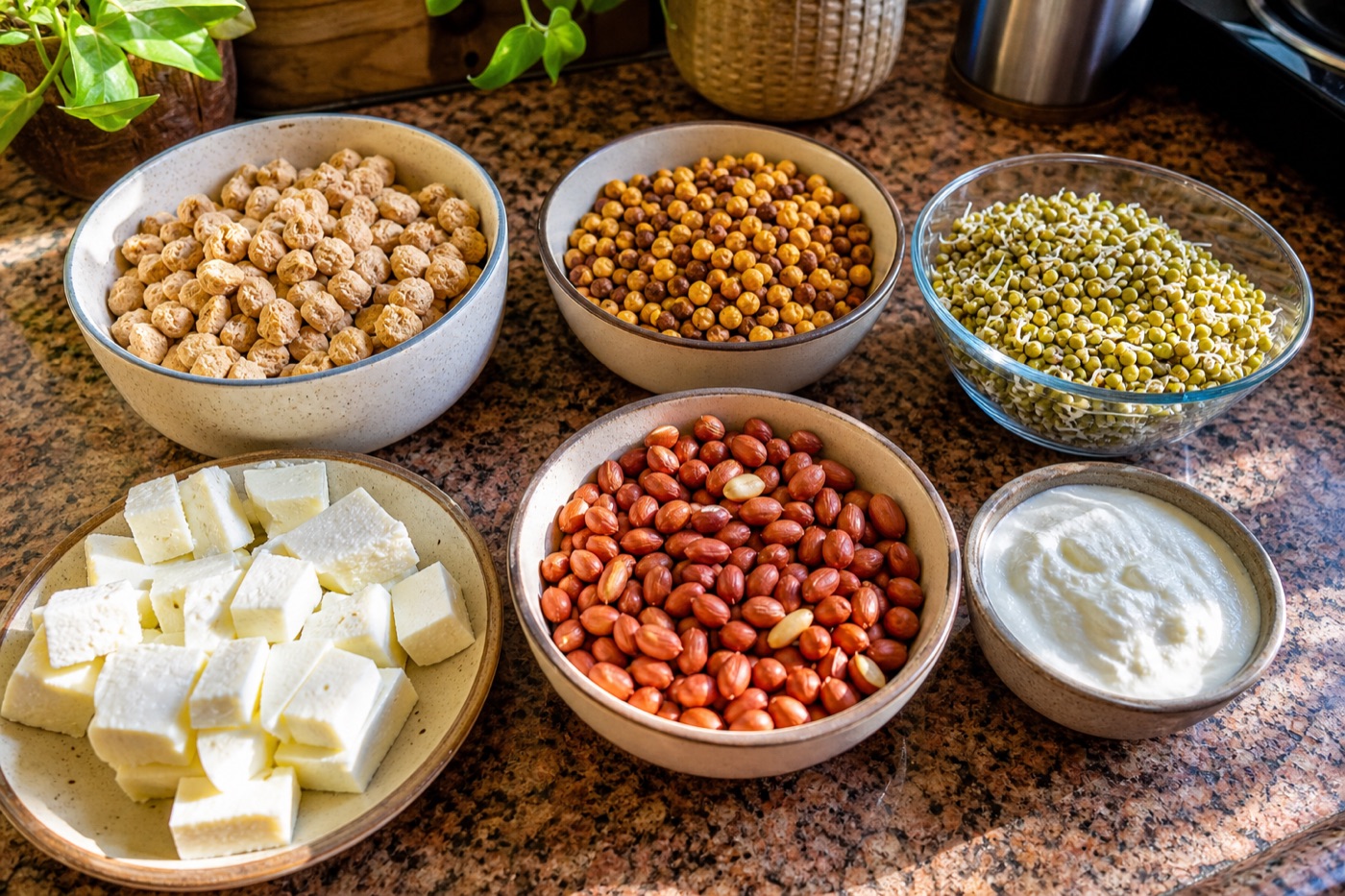
- Protein per 100 g
- Protein per everyday serving
- A sample vegetarian day with about 70 g of protein
- Getting better-quality protein
- Practical tips for vegetarian homes
- The bottom line
The richest vegetarian protein sources in an Indian kitchen are dry soya chunks (about 50 g of protein per 100 g), dals and besan (about 20–25 g per 100 g raw), roasted chana and sattu (about 18–22 g), peanuts (about 23–26 g), paneer (about 18–20 g) and tofu (about 12–17 g). Milk, curd and hung curd add steady amounts through the day. With one good source at every meal, most vegetarian adults can meet ICMR-NIN’s protein requirement without supplements.
Values below are approximate and based on figures in ICMR-NIN’s Indian Food Composition Tables; products and recipes vary.
Protein per 100 g
| Food | Protein per 100 g | Energy per 100 g |
|---|---|---|
| Soya chunks, dry | about 50–52 g | about 340–350 kcal |
| Whole soybean, dry | about 35–38 g | about 400–430 kcal |
| Peanuts, raw | about 23–26 g | about 560–580 kcal |
| Pumpkin seeds | about 25–30 g | about 550–590 kcal |
| Moong, masoor or urad dal, raw | about 23–25 g | about 320–350 kcal |
| Toor dal, raw | about 21–22 g | about 330–345 kcal |
| Besan (gram flour) | about 20–22 g | about 350–380 kcal |
| Roasted chana or sattu | about 18–22 g | about 360–400 kcal |
| Almonds | about 20–21 g | about 580–610 kcal |
| Paneer, full-fat | about 18–20 g | about 250–300 kcal |
| Tofu, firm | about 12–17 g | about 110–150 kcal |
| Rajgira (amaranth) | about 13–14 g | about 350–370 kcal |
| Hung curd | about 8–10 g | about 100–130 kcal |
| Curd, toned milk | about 3–4 g | about 60–70 kcal |
| Toned milk, per 100 ml | about 3–3.5 g | about 55–60 kcal |
Nuts and seeds are high in protein but also very high in calories, so they are best used in small handfuls or as toppings.
Protein per everyday serving
Grams per 100 g are useful, but real meals come in katoris and handfuls. Here is what common servings provide:
- 1 katori cooked dal (from 30–40 g raw): about 7–10 g
- 1 katori rajma or chole: about 8–12 g
- 30 g soya chunks (dry weight), cooked as a curry: about 15 g
- 50 g paneer: about 9–10 g
- 100 g firm tofu: about 12–17 g
- 1 besan or moong dal chilla: about 7–10 g
- 30 g roasted chana: about 6 g
- 2 tablespoons sattu (about 20 g) in a drink: about 4 g
- 30 g peanuts: about 7–8 g
- 1 glass (250 ml) toned milk: about 8 g
- 1 katori (150 g) curd: about 5–6 g
- 2 phulkas: about 6–7 g
A sample vegetarian day with about 70 g of protein
This day, built from ordinary home food, comfortably exceeds the ICMR-NIN requirement for a 65 kg adult (about 54 g).
- Breakfast: two moong dal chillas with mint chutney and a katori of curd. About 18–20 g.
- Lunch: two phulkas, a katori of toor dal, a vegetable sabzi and salad. About 15–19 g.
- Evening: a handful of roasted chana with a glass of chaas. About 7–8 g.
- Dinner: a katori of rice with soya chunk and peas curry and a dry sabzi. About 20–23 g.
- Bedtime: a small glass of haldi milk made with toned milk. About 6–7 g.
That totals roughly 65–75 g, without paneer at all. Swap the soya curry for palak paneer or tofu bhurji on other days for variety. To work out your own target, see our guide on how much protein Indians need.
Getting better-quality protein
Plant proteins differ in their mix of essential amino acids. Cereals tend to be low in lysine; pulses are low in methionine. Combining them, as Indian cooking traditionally does, fills the gaps:
- dal with rice or roti;
- rajma-chawal and chole-kulche;
- idli and dosa, made from rice and urad dal;
- khichdi, which cooks rice and moong together;
- curd or milk alongside any of these.
Soya is a notable exception among plants, as its amino acid profile is close to that of animal protein, which makes soya chunks and tofu particularly useful for vegetarians.
Practical tips for vegetarian homes
- Make dal thicker, or have two katoris. A watery dal provides less protein per serving than a thick one.
- Use besan and sattu. Chillas, besan-coated vegetables, sattu parathas and sattu sherbet are all quick wins.
- Sprout pulses. Sprouted moong and chana make quick salads and chaat.
- Add soya chunks to pulao or sabzi. A small handful transforms the protein content.
- Hang your curd. Straining curd overnight gives a thick, high-protein base for raita, dips or breakfast.
- Snack smart. Roasted chana, peanuts and makhana beat biscuits and namkeen.
- Mind the oil. Paneer, peanuts and nuts are protein-rich but also calorie-dense, so fry less and measure more.
Our guide to calories in paneer has more detail on making paneer dishes lighter.
The bottom line
A vegetarian Indian diet can easily provide plenty of protein. Put a pulse, soya, paneer or dairy food on the plate at every meal, combine cereals with dals, snack on roasted chana or peanuts in sensible amounts and make good use of curd and milk. If you have kidney disease, are pregnant, are an older adult with weight loss, or are under 18, ask a doctor or registered dietitian to tailor protein advice for you.
Frequently asked questions
Can vegetarians get enough protein from Indian food?
Yes. A typical vegetarian day built around dal, curd or milk, whole grains and a pulse- or soya-based dish can comfortably reach the ICMR-NIN requirement of about 0.83 g per kg of body weight. The key is including a protein source at every meal.
Which vegetarian Indian food has the most protein?
Dry soya chunks lead by a wide margin, with roughly 50 g of protein per 100 g. Among everyday foods, dals, besan, roasted chana, sattu, peanuts and paneer are all strong sources.
Is the protein in dal as good as the protein in meat?
Pulses on their own are slightly lower in one essential amino acid, methionine, while cereals are low in lysine. Eating them together, as in dal-rice or rajma-roti, gives a more complete mix, and dairy adds further high-quality protein.