Calories in paneer, and paneer dishes
Full-fat paneer has roughly 250–300 kcal and 18–20 g protein per 100 g. Here's what that means for palak paneer, tikka, bhurji and paneer butter masala.
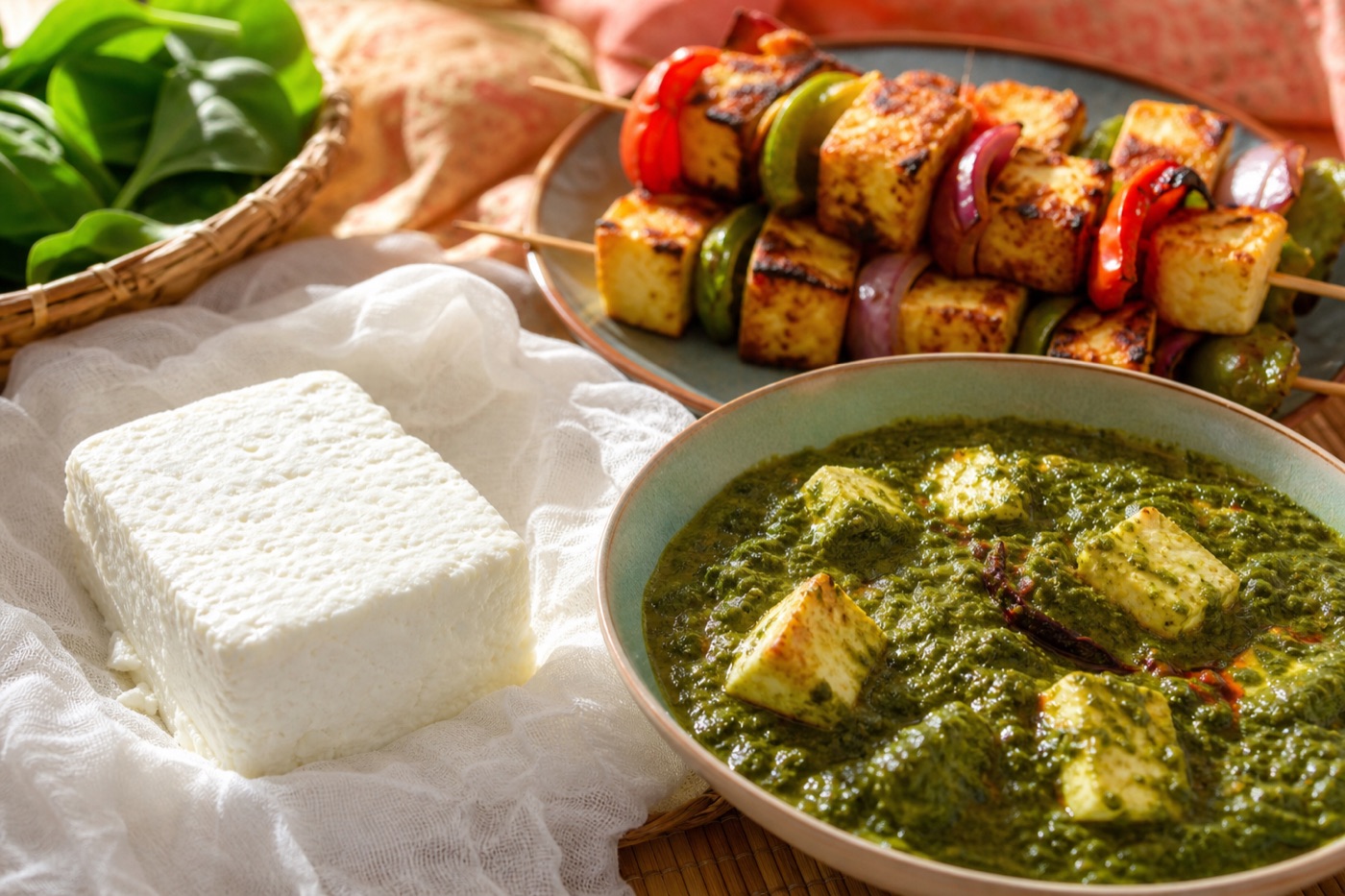
- Paneer on its own
- Paneer dishes, katori by katori
- How paneer fits into a balanced plate
- Making paneer dishes lighter at home
- Quick answers
- The bottom line
Full-fat paneer contains roughly 250–300 kcal per 100 g, with about 18–20 g of protein and 20–25 g of fat. A typical 50 g serving, around six to eight small cubes, is therefore about 130–150 kcal and 9–10 g of protein. Paneer dishes vary much more: a home-style palak paneer may be 200–300 kcal per katori, while restaurant paneer butter masala or shahi paneer can reach 350–550 kcal.
Values below are approximate, based on composition data for paneer in ICMR-NIN’s Indian Food Composition Tables and on common recipes.
Paneer on its own
Paneer is made by curdling hot milk with an acid such as lemon juice or vinegar, then pressing the curds. The kind of milk decides most of the calories.
| Type of paneer | Energy per 100 g | Protein per 100 g | Fat per 100 g |
|---|---|---|---|
| Full-fat (whole cow or buffalo milk) | about 250–300 kcal | about 18–20 g | about 20–25 g |
| Low-fat (toned or skimmed milk) | about 180–220 kcal | about 18–24 g | about 8–15 g |
| Firm tofu, for comparison | about 110–150 kcal | about 12–17 g | about 6–9 g |
Buffalo milk paneer is usually softer and richer than cow milk paneer. If you make paneer at home, a litre of whole milk generally gives you somewhere around 180–250 g, depending on the milk and how firmly you press it.
Paneer is also a good source of calcium, and a handy protein option for vegetarians. Its main drawback is that much of its fat is saturated, so it is worth keeping portions sensible rather than making it the centrepiece of every meal.
Paneer dishes, katori by katori
The paneer usually accounts for less than half the calories in a paneer dish. The gravy, with its oil, butter, cream, cashew paste or coconut, provides the rest.
Lighter preparations
- Paneer tikka, grilled or air-fried, 6 pieces: about 300–450 kcal, depending on size and marinade
- Matar paneer, home-style, 1 katori: about 220–320 kcal
- Palak paneer, home-style, 1 katori: about 200–300 kcal
- Kadai paneer, 1 katori: about 250–350 kcal
Richer preparations
- Paneer bhurji (100 g paneer with 2 tsp oil), 1 katori: about 300–380 kcal
- Paneer butter masala, restaurant, 1 katori: about 350–500 kcal
- Shahi paneer or paneer makhani, 1 katori: about 400–550 kcal
- Chilli paneer, battered and fried: about 400–550 kcal per portion
- Paneer pakora, 4 pieces: about 300–400 kcal
- Paneer paratha, 1 medium: about 280–380 kcal
Spot the pattern: grilled, tawa-tossed and spinach-based dishes are the lighter end; anything with cream, butter, cashew paste or batter climbs fast.
How paneer fits into a balanced plate
ICMR-NIN’s guidance for Indians suggests a mix of protein sources across the day, including pulses, milk and curd, nuts and seeds, with paneer as one option among many. A practical approach for a vegetarian lunch or dinner might be:
- A moderate portion of paneer, around 50–75 g in the dish.
- A katori of dal to add fibre and more protein.
- A big serving of vegetables, such as a dry sabzi, kachumber or the spinach in palak paneer itself.
- Two phulkas or a katori of rice.
- Curd or buttermilk on the side.
That gives a filling meal with a good spread of protein, without relying on 150 g of paneer in rich gravy. To work out how much protein you need overall, see our guide to daily protein needs for Indians.
Making paneer dishes lighter at home
- Grill, bake or air-fry tikka instead of shallow-frying.
- Use curd or milk instead of cream in gravies; a spoonful of hung curd gives a creamy finish.
- Swap part of the cashew paste for blended onion, tomato and a few melon seeds.
- Cut paneer into smaller cubes. You get more pieces for the same weight, which makes a portion feel bigger.
- Bulk out with vegetables. Capsicum, peas, onions, mushrooms and spinach all stretch the paneer further.
- Try half paneer, half tofu in bhurji or tikka for a lighter version with a similar texture.
- Measure the oil. Use one or two teaspoons for a family-size kadai.
Quick answers
Does raw paneer have fewer calories than cooked?
The paneer itself barely changes when cooked. What changes is the fat it absorbs. Pan-fried cubes soak up oil; grilled or raw cubes do not.
Is paneer good for breakfast?
Yes, in moderate amounts. Paneer bhurji with a phulka, or a few cubes of paneer in a vegetable sandwich, add protein that helps keep you full until lunch. Our list of high-protein vegetarian Indian foods has more ideas.
The bottom line
Full-fat paneer is about 250–300 kcal per 100 g and a good vegetarian protein, but it is also rich in saturated fat. Keep portions to around 50–100 g, prefer grilled and vegetable-heavy dishes, save cream-laden gravies for special occasions and pair paneer with dal, curd and plenty of vegetables. If you have high cholesterol or heart disease, ask your doctor or dietitian how often paneer should feature in your meals.
Frequently asked questions
How much paneer can I eat in a day?
For most adults, a portion of about 50–100 g fits comfortably into a balanced day, providing roughly 9–20 g of protein. Because full-fat paneer is high in saturated fat, it works best alongside dals, curd and other protein sources rather than as the only one.
Is low-fat paneer worth it?
If you eat paneer often and want to cut calories, paneer made from toned or skimmed milk can save roughly a quarter to a third of the calories. It can be a little firmer and less creamy, so it suits tikka and bhurji better than rich gravies.
Is paneer or tofu better for weight loss?
Firm tofu usually has about half the calories of full-fat paneer for a similar or slightly lower amount of protein. Both can fit into a weight-loss plan; it comes down to taste, cooking style and portion size.