Calories in roti, chapati, paratha and rice
A plain phulka has about 80–100 kcal and a katori of cooked rice about 180–210. Here are rough calories for roti, chapati, paratha, puri, naan and rice dishes.
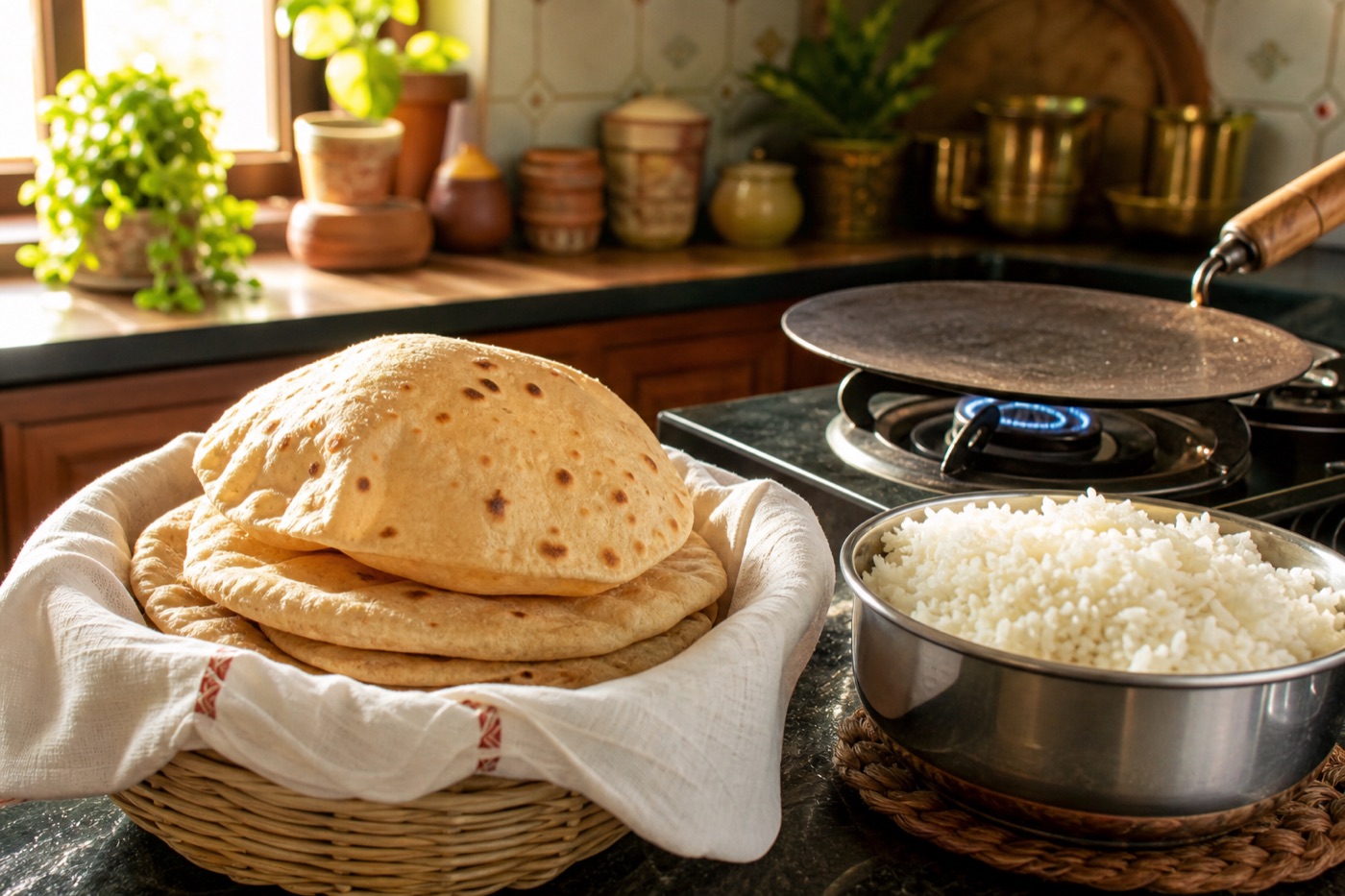
- Rotis and breads
- Rice and rice dishes
- Roti or rice: which is better?
- Millets: worth adding to the mix
- Portion tips that work at home
- The bottom line
A plain phulka made from about 25–30 g of whole wheat atta has roughly 80–100 kcal, and a medium katori of cooked white rice (about 150 g) has about 180–210 kcal. Parathas jump to around 180–350 kcal each depending on the fat and filling, and a single deep-fried puri can carry 70–100 kcal. The grain itself is rarely the problem; size, ghee, oil and second helpings are what make the difference.
All values here are approximate, based on composition figures from ICMR-NIN’s Indian Food Composition Tables and typical home recipes. Your own rotis may be bigger or smaller than these.
Rotis and breads
Whole wheat atta contains roughly 320–340 kcal per 100 g before cooking. What changes from one bread to the next is how much flour goes into each piece and how much fat is used.
| Bread | Typical size | Approx. calories |
|---|---|---|
| Phulka, no ghee | 25–30 g atta | 80–100 kcal |
| Chapati with a little oil in the dough | 30–40 g atta | 100–130 kcal |
| Phulka or chapati with 1 tsp ghee on top | – | add 40–45 kcal |
| Jowar or bajra roti (bhakri) | 35–45 g flour | 120–160 kcal |
| Makki di roti | 40–50 g flour, with ghee | 180–250 kcal |
| Tandoori roti | restaurant size | 130–180 kcal |
| Plain layered paratha | 1 medium, cooked with 1–2 tsp fat | 180–250 kcal |
| Aloo, gobi or mooli paratha | 1 medium | 250–350 kcal |
| Paneer paratha | 1 medium | 280–380 kcal |
| Puri, deep-fried | 1 small | 70–100 kcal |
| Plain naan | restaurant size | 250–350 kcal |
| Butter or garlic naan | restaurant size | 300–400 kcal |
Two quick observations. A stuffed paratha with a blob of white butter on top can easily equal three or four phulkas. And a plate of five or six puris at a Sunday breakfast adds up to around 400–600 kcal before the aloo sabzi.
Rice and rice dishes
Raw white rice contains about 345–360 kcal per 100 g. Cooking adds water, so cooked rice comes to roughly 130–140 kcal per 100 g, depending on how soft you like it.
- Steamed white rice, 1 medium katori (about 150 g): about 180–210 kcal
- Steamed white rice, 1 heaped plate (about 250–300 g): about 330–420 kcal
- Brown rice, 1 medium katori: about 170–200 kcal, with more fibre
- Jeera rice made with ghee, 1 katori: about 220–280 kcal
- Curd rice, 1 katori: about 200–260 kcal
- Lemon rice or tamarind rice, 1 katori: about 250–300 kcal
- Khichdi with moong dal, 1 katori: about 180–240 kcal
- Veg pulao, 1 katori: about 220–300 kcal
- Restaurant fried rice, 1 portion: about 500–700 kcal
Rice dishes made with oil, coconut, peanuts or ghee climb quickly. Khichdi is a useful middle ground because the dal adds protein and fibre for a similar number of calories.
Roti or rice: which is better?
The honest answer is that both fit into a healthy diet. Here is how a typical serving compares:
- Two plain phulkas give roughly 160–200 kcal, around 6–7 g of protein and a few grams of fibre.
- One medium katori of white rice gives roughly 180–210 kcal, around 3–4 g of protein and less fibre.
- One medium katori of brown rice gives a similar number of calories to white rice, with more fibre.
Whole wheat has a slight edge for fibre and protein. Rice is easier to overeat, because a second ladle goes onto the plate without much thought. If you love rice, the better move is usually to keep it to one level katori and fill the rest of the plate with dal, sabzi and salad, rather than switching to rotis you do not enjoy.
Millets: worth adding to the mix
ICMR-NIN’s dietary guidelines encourage Indians to include millets such as jowar, bajra, ragi and smaller millets, alongside wheat and rice. They are comparable in calories to wheat and rice, but often bring more fibre and minerals. Ragi stands out for its calcium; bajra for its iron. A jowar bhakri at dinner or ragi dosa at breakfast is an easy way to diversify your grains.
Portion tips that work at home
- Make rotis a consistent size. Use similar-sized dough balls so you know what one roti means.
- Skip the ghee on every roti. Add it to one, or brush very lightly, rather than spreading a teaspoon on each.
- Serve rice with a katori. Measuring with the same katori every day stops portions slowly creeping up.
- Choose stuffed parathas for breakfast, not every meal. They are filling, but heavy.
- Pair grains with dal or curd. Combining cereals with pulses improves protein quality, a point ICMR-NIN makes repeatedly.
For the other half of the meal, see our guide to calories in dal. To see where rotis and rice fit in a balanced day, read about ICMR-NIN’s My Plate for the Day, and if you are trying to lose weight, our explainer on calorie deficits shows which grain swaps save the most.
The bottom line
A plain phulka is about 80–100 kcal and a katori of rice about 180–210. Neither is fattening in itself; it is the extra rotis, the ghee on top, the second plate of rice and the fried breads that add up. Keep portions consistent, go easy on fat, mix in millets and let dal and vegetables take up more room on your plate.
Frequently asked questions
Is roti better than rice for weight loss?
Calorie for calorie, two plain phulkas and one katori of cooked rice are fairly similar. Whole wheat rotis bring a little more fibre and protein, but portion size and the ghee or oil you add matter more than the choice between them.
How many rotis can I eat in a day?
There is no fixed number; it depends on your total calorie needs and what else is on your plate. Many sedentary adults find two or three phulkas per meal, with plenty of dal and vegetables, is a comfortable amount.
Does brown rice have fewer calories than white rice?
Not by much once cooked. The main advantage of brown rice is its extra fibre and some additional vitamins and minerals, which can help you feel full for longer.