Calories in gulab jamun, jalebi, ladoo, kaju katli
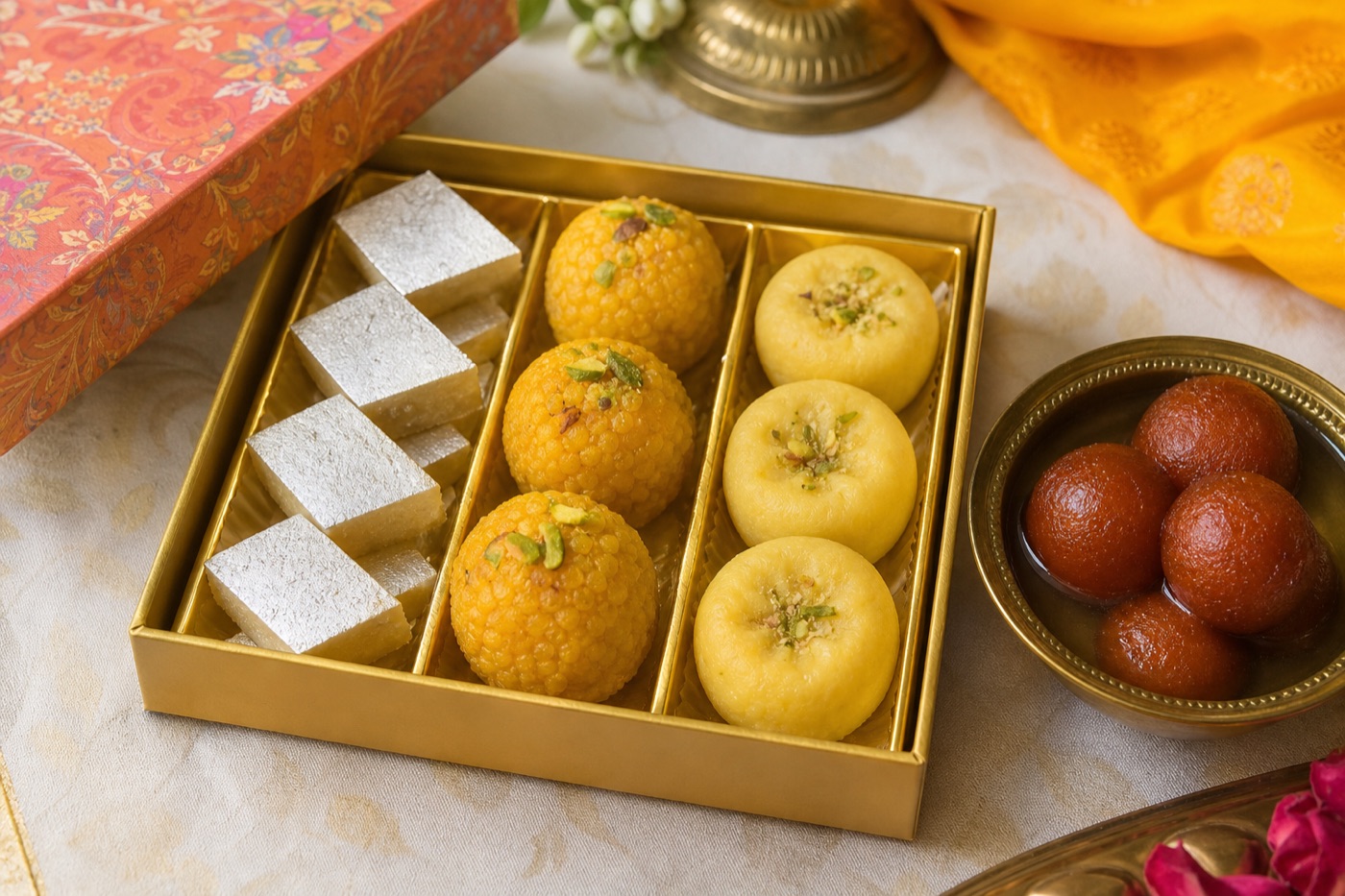
A gulab jamun has about 140–180 kcal, a jalebi coil 100–150, a besan ladoo 150–200 and a kaju katli piece 60–90. Compare popular mithai, plus festive tips.
- Syrup-soaked sweets
- Ladoos
- Barfis and dry sweets
- Milk-based desserts and halwas
- Sugar: how much is too much?
- Festive season tips
- The bottom line
One medium gulab jamun with its syrup has about 140–180 kcal, a single coil of jalebi roughly 100–150 kcal, a besan ladoo 150–200 kcal and a diamond of kaju katli about 60–90 kcal. Most mithai combine sugar with ghee, khoa, nuts or fried batter, so they pack a lot of energy into a small piece. Enjoying one or two at a time is easy to fit into a balanced day; working through a festive box over an evening is a different story.
All figures below are approximate. Sizes vary from one halwai to the next, and home recipes differ widely in how much ghee and sugar they use.
Syrup-soaked sweets
These are fried or poached and then soaked in sugar syrup, which adds a lot of calories without adding much bulk.
| Sweet | Typical piece | Approx. calories |
|---|---|---|
| Gulab jamun | 1 medium, with syrup | 140–180 kcal |
| Kala jamun | 1 medium | 160–200 kcal |
| Jalebi | 1 medium coil | 100–150 kcal |
| Imarti | 1 piece | 150–200 kcal |
| Rasgulla | 1, with syrup | 100–130 kcal |
| Rasgulla, syrup squeezed out | 1 | 80–100 kcal |
| Rasmalai | 1 piece with rabri | 150–220 kcal |
Jalebi is easy to underestimate because the coils are light and crisp. A 100 g plate from a sweet shop can be around 400 kcal, roughly the same as a full breakfast.
Ladoos
- Besan ladoo, medium: about 150–200 kcal
- Motichoor or boondi ladoo, medium: about 150–180 kcal
- Rava ladoo: about 150–180 kcal
- Coconut ladoo: about 100–150 kcal
- Dry fruit or dates ladoo (no added sugar): about 100–150 kcal
- Til (sesame) ladoo, small: about 80–120 kcal
Ladoos made with lots of ghee and sugar sit at the top of these ranges. Smaller, homemade ones can be much lighter.
Barfis and dry sweets
- Kaju katli, 1 diamond (15–20 g): about 60–90 kcal
- Milk or khoa barfi, 1 piece: about 120–170 kcal
- Peda, 1 piece: about 90–130 kcal
- Sandesh, 1 piece: about 80–120 kcal
- Soan papdi, 1 piece: about 120–140 kcal
- Mysore pak, 1 piece: about 150–200 kcal
- Ukadiche modak (steamed), 1 piece: about 80–120 kcal
- Fried modak, 1 piece: about 120–180 kcal
Per 100 g, kaju katli is actually quite dense, at roughly 450–500 kcal. It just comes in thin, small pieces.
Milk-based desserts and halwas
| Dessert | Portion | Approx. calories |
|---|---|---|
| Kheer or payasam | 1 katori | 200–300 kcal |
| Phirni | 1 small bowl | 200–250 kcal |
| Shrikhand | 1 small katori (100 g) | 250–300 kcal |
| Gajar ka halwa | 1 katori | 300–450 kcal |
| Sooji halwa or sheera | 1 katori | 300–400 kcal |
| Moong dal halwa | 1 katori | 400–550 kcal |
Moong dal halwa is one of the heaviest of all because the dal is roasted in a large amount of ghee.
Sugar: how much is too much?
The World Health Organization advises keeping free sugars below 10% of daily energy, and suggests that going below 5% brings further benefits. On a 2,000 kcal day, 5% works out at about 25 g of sugar, roughly six level teaspoons. Two or three syrupy sweets can easily take you past that before you count the sugar in chai. ICMR-NIN’s dietary guidelines for Indians also call for limiting added sugar and foods high in fat, sugar and salt.
None of this means giving up sweets. It means treating them as a pleasure to savour rather than a daily habit.
Festive season tips
Diwali, Holi, Eid, Onam, Durga Puja, Pongal, weddings: India never runs short of reasons to celebrate. A few habits help:
- Choose your favourite and skip the rest. One piece of the sweet you love is more satisfying than a little of everything.
- Go small. Cut barfis and ladoos into halves; you get the taste for half the calories.
- Squeeze or drain the syrup from rasgullas and gulab jamuns.
- Have sweets after a meal, not on an empty stomach, when it is easier to stop at one.
- Share the box. Pass on extra mithai to neighbours, staff or friends rather than letting it tempt you for a week.
- Make lighter versions at home. Use less ghee, try dates and nuts for sweetness, and make smaller pieces.
- Keep moving. A walk after a festive meal is a lovely tradition to start.
The bottom line
Indian sweets typically range from about 60 to 200 kcal per piece, and a katori of halwa can reach 300–550 kcal. Enjoy them, but in small portions and on occasions, and remember that jaggery and “sugar-free” labels do not make a sweet calorie-free. If you have diabetes or prediabetes, ask your doctor or dietitian how best to fit sweets into your meals. For other indulgent favourites, see our guides to street food and chai, filter coffee and lassi.
Frequently asked questions
Which Indian sweet has the fewest calories?
Per piece, small items such as a kaju katli diamond, a sandesh, a steamed modak or a squeezed rasgulla tend to be among the lightest, at roughly 60–120 kcal. Fried, syrup-soaked or ghee-rich sweets are heavier.
Are sweets made with jaggery lower in calories?
Not really. Jaggery contains roughly the same energy as sugar per gram, around 380–400 kcal per 100 g. It brings small amounts of minerals, but it still counts as added sugar.
Are 'sugar-free' mithai safe to eat freely?
They usually still contain khoa, ghee, nuts or flour, so the calories can be similar to regular sweets. People with diabetes should check with their doctor about how such sweets fit into their meal plan.