Calories in dal: moong, masoor, toor, rajma, chole
A katori of home-style dal has roughly 120–180 kcal and 7–10 g protein. Compare moong, masoor, toor, urad, rajma and chole, plus how the tadka changes it.
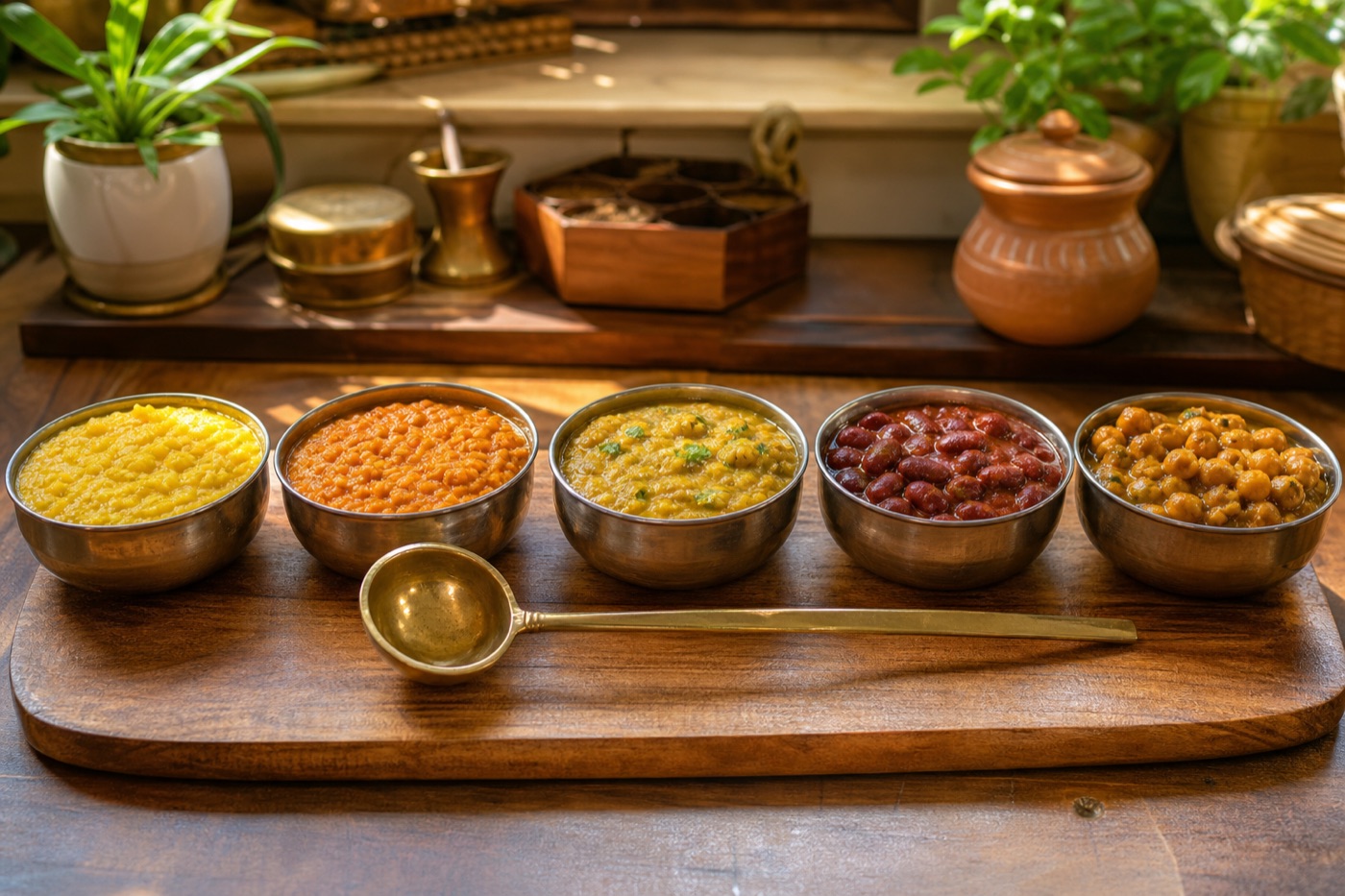
- Raw dals compared
- A katori of cooked dal, dish by dish
- Why dal deserves a daily spot
- How to make dal lighter without losing flavour
- Common questions
- The bottom line
A medium katori (about 150 ml) of everyday home-style dal, made from roughly 30–40 g of raw dal with a teaspoon of ghee or oil in the tadka, has about 120–180 kcal and 7–10 g of protein. Rajma and chole are a little heavier, at around 180–280 kcal a katori, and restaurant dal makhani can reach 300–400 kcal because of butter and cream. The type of pulse matters less than how much fat goes in and how thick you make it.
Raw dals compared
Before cooking, most dals and whole pulses sit in a similar range. Approximate values per 100 g of raw pulse, based on ICMR-NIN’s Indian Food Composition Tables:
| Pulse (raw) | Energy | Protein | Notes |
|---|---|---|---|
| Moong dal, split | about 330–350 kcal | about 23–25 g | Easy to digest, quick to cook |
| Masoor dal | about 320–340 kcal | about 24–25 g | Cooks fast without soaking |
| Toor (arhar) dal | about 330–345 kcal | about 21–22 g | Base of sambar and everyday dal |
| Urad dal | about 330–345 kcal | about 23–24 g | Used in dal makhani, idli and dosa batter |
| Chana dal | about 350–370 kcal | about 20–21 g | Slightly higher in fat |
| Rajma, dry | about 300–340 kcal | about 19–22 g | Must be soaked and fully cooked |
| Kabuli chana, dry | about 340–365 kcal | about 18–20 g | The base of chole |
All of them are rich in fibre, folate, iron and potassium. The small differences between them are not worth worrying about for weight; pick the ones your family enjoys.
A katori of cooked dal, dish by dish
Once cooked, the numbers depend on three things: how much raw dal goes into each katori, how much fat is in the tadka and whether there is cream, butter, coconut or jaggery.
Everyday dals
- Moong or masoor dal, thin, with 1 tsp tadka: about 120–160 kcal
- Toor dal (home-style), 1 tsp ghee tadka: about 130–180 kcal
- Sambar with vegetables: about 100–150 kcal
- Gujarati dal with jaggery and kokum: about 130–180 kcal
- Dal fry with 2 tsp ghee: about 180–220 kcal
Richer dals and whole pulses
- Rajma masala: about 180–260 kcal
- Chole or chana masala: about 200–280 kcal
- Restaurant dal tadka: about 200–300 kcal
- Dal makhani with butter and cream: about 280–400 kcal
A useful mental shortcut: every extra teaspoon of ghee or oil in your tadka adds about 40–45 kcal to the whole pot, and every spoonful of cream or white butter on top adds about 50–100 kcal to your bowl.
Why dal deserves a daily spot
Pulses are among the most valuable foods in the Indian diet. A katori brings protein, fibre and minerals for a modest number of calories, which is why ICMR-NIN’s dietary guidelines recommend pulses, beans or other protein foods every day. In vegetarian households, dal often does the heavy lifting for protein.
The classic dal-chawal or dal-roti pairing is not just tradition. Cereals are relatively low in the amino acid lysine, which pulses provide; pulses are relatively low in methionine, which cereals provide. Together they give a more complete protein. For more on reaching your protein target from vegetarian foods, see our guide to high-protein vegetarian Indian foods.
How to make dal lighter without losing flavour
- Measure the tadka. Use a teaspoon, not a free pour. One teaspoon of ghee for a family pot is enough to carry the jeera, garlic and hing.
- Add more vegetables. Lauki, spinach, tomatoes, drumsticks and methi bulk up the katori with very few extra calories.
- Keep it thinner. A slightly thinner dal stretches the same raw dal across more servings, so each katori has fewer calories.
- Save makhani for occasions. Make it with less butter and use curd or milk instead of cream for an everyday version.
- Sprout whole moong. Sprouted moong salad with onion, tomato and lemon is filling and light.
- Cook rajma and chole at home. Restaurant versions are often richer in oil and cream than home cooking.
Common questions
Should I count dal as protein or carbohydrate?
Both. A katori of plain dal contains roughly 7–10 g of protein and around 15–25 g of carbohydrate, much of it slowly digested with fibre. When planning a plate, treat it as your main protein if you are vegetarian, and keep the rice or roti portion moderate alongside it.
Are packaged ready-to-eat dals similar?
They vary a great deal. Check the label for kcal per 100 g and the fat line, because some are made with generous amounts of butter or cream.
The bottom line
A katori of home-style dal is roughly 120–180 kcal with useful protein and fibre, and it belongs on the plate most days. Keep the tadka to a measured teaspoon, add vegetables, and save the rich restaurant styles for weekends. To see how dal pairs with your grains, read our guide to roti and rice calories, or learn to estimate whole pots with our article on counting calories in home-cooked food.
Frequently asked questions
Which dal has the lowest calories?
Raw dals are all fairly similar, at roughly 320–360 kcal per 100 g. Cooked as a thin, home-style dal with a light tadka, moong and masoor are usually among the lightest, while chana dal is a little higher in fat.
Is dal enough protein on its own?
Dal is a good source of protein, but the amino acid mix in pulses is complemented by cereals. Eating dal with rice or roti, as most Indian meals already do, gives better quality protein than either alone.
Does dal make you gain weight?
Plain dal is a moderate-calorie, high-fibre food that fits well in most diets. Weight gain is more likely from rich restaurant versions with butter and cream, or from large helpings of rice alongside.