Calories in samosa, vada pav, pani puri and other street food
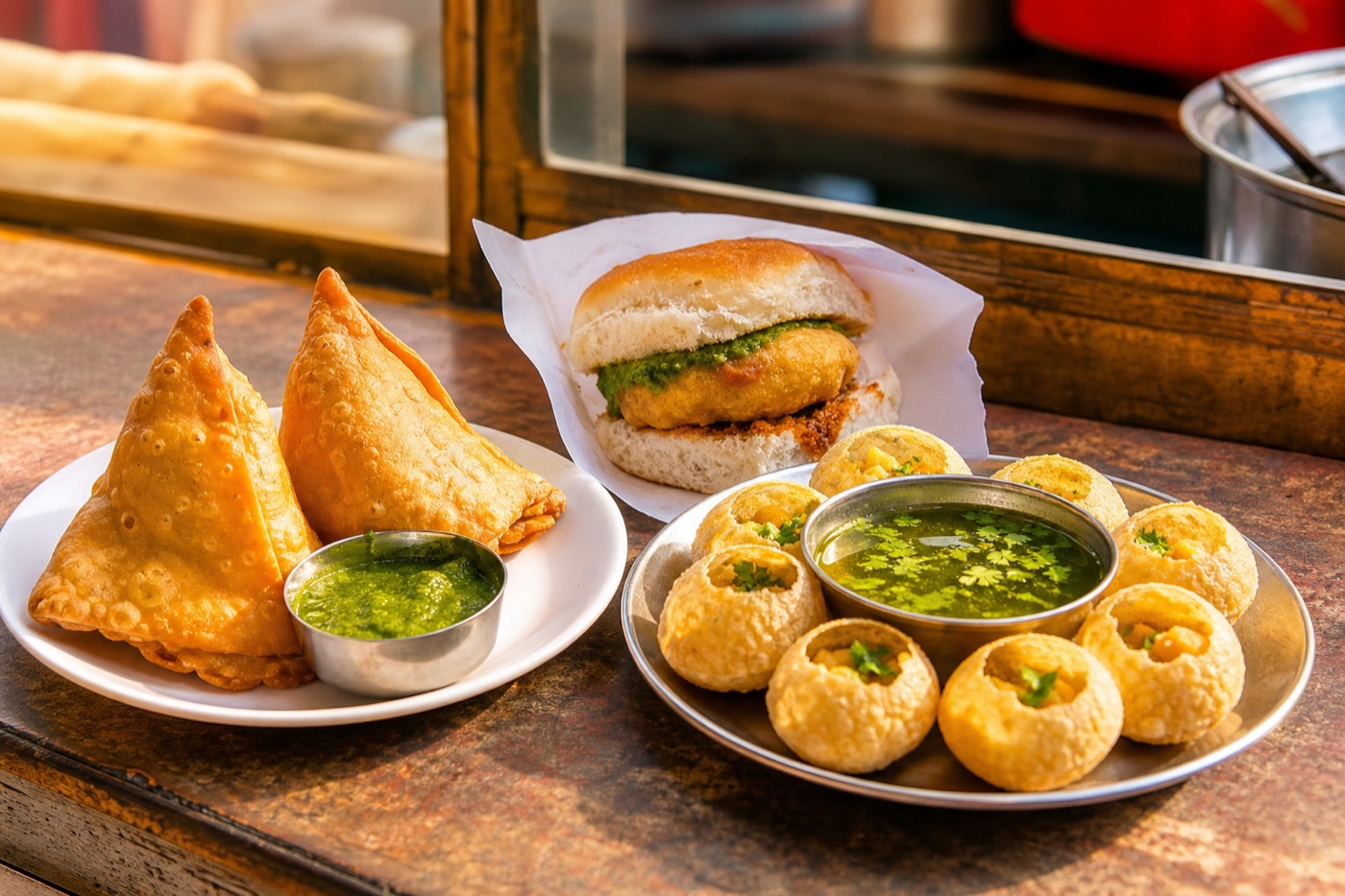
A samosa has about 250–320 kcal, a vada pav 280–350 and six pani puris 150–220. Street snack calories, from chaat to momos, with lighter picks.
- Mumbai favourites
- Delhi and North Indian chaat
- Kolkata, the East and the North-East
- South and West Indian snacks
- Salt, oil and hygiene
- Lighter ways to enjoy street food
- The bottom line
A large samosa contains roughly 250–320 kcal, a vada pav with chutneys about 280–350 kcal, and a plate of six pani puris around 150–220 kcal. Heavier plates such as pav bhaji with butter or chole kulche typically come to 450–650 kcal, which is a full meal rather than a snack. Deep frying, butter and sweet toppings drive the numbers, so roasted, steamed and sprout-based options are the lighter choices.
Street food portions and recipes change from one thela to the next, so treat all figures here as approximate. They are based on typical recipes and composition values for ingredients in ICMR-NIN’s Indian Food Composition Tables.
Mumbai favourites
| Snack | Typical portion | Approx. calories |
|---|---|---|
| Vada pav | 1, with chutneys | 280–350 kcal |
| Pav bhaji | 2 pav with bhaji and butter | 450–650 kcal |
| Dabeli | 1 | 250–350 kcal |
| Bhel puri | 1 plate | 200–300 kcal |
| Sev puri or dahi puri | 1 plate of 6 | 250–350 kcal |
| Ragda pattice | 1 plate | 350–450 kcal |
The amount of butter on pav bhaji makes the biggest difference. An “extra butter” order can add 100–150 kcal or more to the plate.
Delhi and North Indian chaat
- Samosa, large: about 250–320 kcal each; a cocktail-size one is about 80–120 kcal
- Aloo tikki chaat, 1 plate: about 300–400 kcal
- Pyaaz or dal kachori, 1 piece: about 200–300 kcal
- Chole kulche, 1 plate: about 450–600 kcal
- Chole bhature, 1 plate: about 700–900 kcal
- Papdi chaat, 1 plate: about 300–400 kcal
- Onion or mixed pakoras, 5–6 pieces: about 250–350 kcal
A samosa with a cup of sweet chai and a jalebi is a very common evening combination, and together it can approach 500 kcal.
Kolkata, the East and the North-East
- Jhalmuri, 1 paper cone: about 150–250 kcal
- Puchka (pani puri), 6 pieces: about 150–220 kcal
- Egg roll: about 350–500 kcal
- Chicken or paneer kathi roll: about 400–600 kcal
- Steamed veg momos, 6 pieces: about 200–300 kcal
- Fried momos, 6 pieces: about 350–450 kcal
Momos are a good example of how cooking method matters: steaming the same dumplings saves around 100–150 kcal compared with frying them.
South and West Indian snacks
- Mirchi bajji, 1 piece: about 120–180 kcal
- Masala vada (paruppu vadai), 1 piece: about 100–150 kcal
- Khaman dhokla, 2 pieces: about 100–150 kcal
- Roasted bhutta (corn on the cob) with lemon and masala: about 100–150 kcal
- Sprouts chaat, 1 bowl: about 150–200 kcal
- Sugarcane juice, 1 glass (about 250 ml): about 150–180 kcal
Sugarcane juice is refreshing on a hot day, but it is almost entirely sugar. Coconut water is a much lighter way to cool down.
Salt, oil and hygiene
Calories are not the only thing to think about with street food:
- Salt. Chaat masala, black salt, pickles and salty pani add up quickly. The World Health Organization recommends adults keep salt below 5 g a day, and two or three chaat plates can use a large share of that.
- Reused oil. Oil heated again and again for frying breaks down. FSSAI advises against repeatedly reusing cooking oil, which is one more reason to keep fried snacks occasional.
- Hygiene. Choose busy stalls with fresh turnover, clean water and covered food. FSSAI’s Eat Right India initiative also promotes cleaner street food hubs in many cities.
Lighter ways to enjoy street food
- Pick one, not three. Have a vada pav or a samosa, not both with a cutting chai and a sweet.
- Go steamed or roasted. Steamed momos, dhokla, roasted corn and sprouts chaat are good choices.
- Ask for less butter and sev. Most vendors will happily go lighter on the butter for pav bhaji or the sev on bhel.
- Count big plates as a meal. If pav bhaji or chole kulche is dinner, skip the second dinner at home.
- Drink water or chaas. Skip sweet sodas and sugarcane juice alongside fried food.
- Share. A plate of pani puri or a portion of momos shared between two is a perfectly satisfying snack.
If you snack on the street often, it can help to note it down for a week or two; our guide to counting calories in Indian food explains how to estimate meals without labels. For the sweet side of the menu, see calories in Indian sweets.
The bottom line
Street food can be a cheerful part of Indian life without derailing your health. Most single snacks sit around 150–350 kcal, while buttered or fried plates can reach 450–900 kcal. Choose steamed, roasted or sprout-based options when you can, stick to one item at a time and treat the bigger plates as a full meal.
Frequently asked questions
Which Indian street food is lowest in calories?
Roasted corn on the cob, sprouts chaat, a modest plate of bhel, steamed momos and dhokla are among the lighter options. Anything deep-fried, buttered or topped with sweet curd and sev will be heavier.
Can I eat street food while trying to lose weight?
Yes, occasionally and with some planning. Choose one item rather than three, prefer roasted or steamed snacks, and treat a big plate such as pav bhaji or chole kulche as a meal rather than an evening snack.
Is pani puri healthy?
Six pani puris are a fairly modest snack in calories. The puris are fried and the water can be salty, so it is best enjoyed as an occasional treat from a stall that keeps good hygiene.