How much protein do you need a day?
ICMR-NIN advises about 0.83 g of protein per kg of body weight a day, around 54 g for a 65 kg man and 46 g for a 55 kg woman. Here's how to meet it.
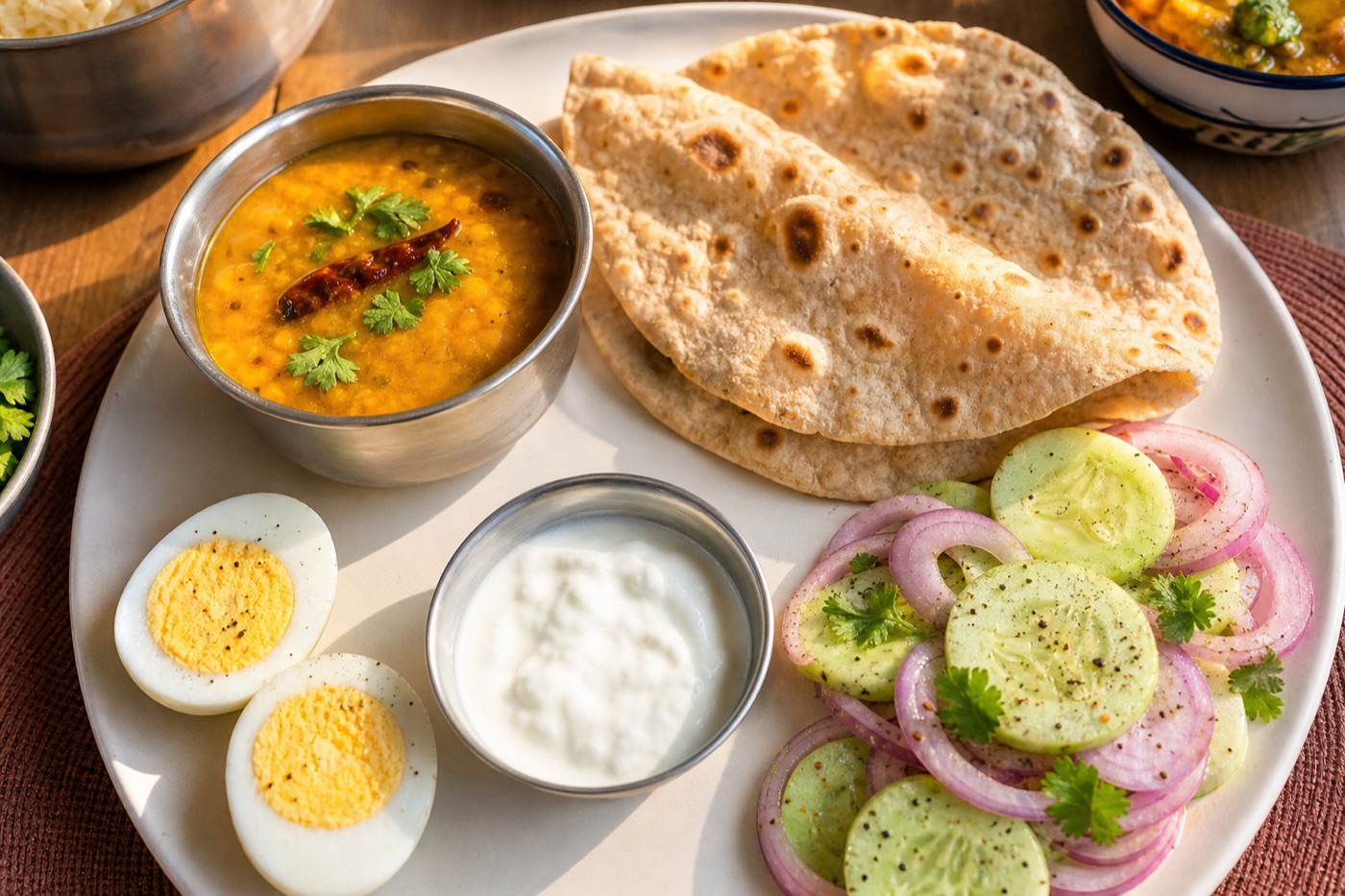
- What the ICMR-NIN figure means
- Your daily target by weight
- Life stages that need more
- Where Indian meals fall short
- Protein in common Indian foods
- How to spread protein through the day
- Is more always better?
- The bottom line
ICMR-NIN’s current nutrient requirements for Indians set the recommended protein intake for healthy adults at about 0.83 g per kg of body weight per day. For its reference adults, that is roughly 54 g a day for a 65 kg man and about 46 g for a 55 kg woman. Pregnant and breastfeeding women need more, and people who do regular strength training often aim somewhat higher, but for most adults, a protein source at every meal covers it.
What the ICMR-NIN figure means
The recommended dietary allowance is set to meet the needs of nearly all healthy adults, so it is a safe target rather than a bare minimum. It assumes good-quality protein, which is why ICMR-NIN emphasises combining cereals with pulses and including milk and other protein-rich foods. A diet built mostly on rice or wheat with only a thin dal may technically get close to the number but provide lower-quality protein.
Your daily target by weight
Multiply your body weight in kilograms by 0.83. The table also shows a higher range of about 1.0–1.2 g per kg, which many people use when they train regularly or want to protect muscle while losing weight.
| Body weight | ICMR-NIN level (0.83 g/kg) | Higher range (1.0–1.2 g/kg) |
|---|---|---|
| 45 kg | about 37 g | about 45–54 g |
| 55 kg | about 46 g | about 55–66 g |
| 65 kg | about 54 g | about 65–78 g |
| 75 kg | about 62 g | about 75–90 g |
| 85 kg | about 71 g | about 85–102 g |
These are rounded estimates. If you have a lot of weight to lose, basing the calculation on your current weight may overstate your needs.
Life stages that need more
Pregnancy. ICMR-NIN adds extra protein in the second and especially the third trimester, as the baby grows fastest.
Breastfeeding. Requirements remain higher than usual during lactation.
Children and teenagers. Their needs per kg of body weight are higher than adults’ because they are growing. Their diets should not be restricted without medical advice.
Older adults. Appetite and muscle mass often decline with age. Making sure protein appears at every meal, in a form that is easy to eat such as dal, curd, eggs or soft paneer, becomes more important.
For any of these situations, your doctor, gynaecologist, paediatrician or a registered dietitian can give a personalised figure.
Where Indian meals fall short
Many Indian meals are rich in cereals and relatively low in protein, especially at breakfast. A few examples of approximate protein per serving:
- A plate of poha: about 4–6 g
- A plate of upma: about 5–7 g
- Two aloo parathas: about 8–10 g
- Three idlis with sambar: about 9–12 g
- Two moong dal chillas with curd: about 17–21 g
If breakfast gives you 5 g and lunch is mostly rice with a watery dal, you can reach the evening with well under half your daily requirement. Upgrading just one meal can fix that.
Protein in common Indian foods
Vegetarian
- 1 katori cooked dal: about 7–10 g
- 1 katori rajma or chole: about 8–12 g
- 50 g paneer: about 9–10 g
- 30 g dry soya chunks: about 15 g
- 1 katori curd: about 5–6 g
- 1 glass toned milk (250 ml): about 8 g
- 30 g roasted chana or peanuts: about 6–8 g
Eggs, fish and meat
- 1 egg: about 6 g
- 100 g cooked chicken breast: about 25–30 g
- 100 g fish such as rohu, surmai or pomfret (raw weight): about 17–22 g
- 100 g lean mutton (raw weight): about 18–20 g
Our list of high-protein vegetarian Indian foods has more detail on plant and dairy sources.
How to spread protein through the day
A simple pattern that suits most Indian homes:
- Breakfast: add a protein to your usual dish, such as sprouts in poha, curd with paratha, a besan chilla, or an egg.
- Lunch: a full katori of thick dal or rajma, plus curd or buttermilk.
- Snack: roasted chana, peanuts, a glass of milk or a boiled egg instead of biscuits.
- Dinner: paneer, tofu, soya, fish, chicken or a second pulse dish alongside vegetables and grains.
That approach gives roughly 15–20 g per main meal, which is easier on digestion and better for appetite than a single large protein meal at night.
Is more always better?
For healthy adults, moderately higher protein intakes from food are generally considered safe. Very high intakes from supplements are a different matter: they add cost and calories, and some products sold online may not contain what the label claims. FSSAI regulates health supplements in India, so check that any product you buy is properly licensed and labelled. People with kidney disease should not increase protein without advice from a nephrologist or renal dietitian.
The bottom line
Most Indian adults need roughly 0.83 g of protein per kg of body weight a day, about 46–54 g for ICMR-NIN’s reference adults. Aim for a good source at every meal, combine cereals with pulses, and lean on dal, curd, milk, paneer, soya, eggs or fish. If you are pregnant, older, very active or managing a health condition, get a personal target from a doctor or registered dietitian. To see how protein fits a balanced plate, read our guide to ICMR-NIN’s My Plate for the Day.
Frequently asked questions
Is 0.83 g per kg enough if I go to the gym?
It covers the needs of most healthy adults, including those who exercise moderately. People doing regular strength training or intense sport often aim higher, commonly around 1.0–1.6 g per kg, ideally with guidance from a qualified sports dietitian.
Do I need protein powder?
Most people can meet their needs from food such as dal, milk, curd, paneer, eggs, fish, chicken, soya and nuts. Powders are a convenience, not a necessity, and quality varies, so read labels carefully.
Should I calculate protein on my current weight or my ideal weight?
For most people, current weight is fine. If you are carrying a lot of excess weight, using a healthy reference weight gives a more sensible figure; a registered dietitian can help you choose.