How many calories do Indians need a day?
ICMR-NIN puts a sedentary Indian man at about 2,100 kcal a day and a sedentary woman near 1,650. Activity, body size and life stage shift these figures.
- The ICMR-NIN numbers at a glance
- Which activity level are you?
- Adjusting for your body weight
- Life stages that change the picture
- Turning a number into a thali
- Why quality matters as much as quantity
- The bottom line
According to ICMR-NIN’s nutrient requirements for Indians, an adult man doing mostly desk work needs roughly 2,100 kcal a day, and a woman with a similar routine about 1,650 kcal. Moderately active adults need more, around 2,700 kcal for men and 2,130 kcal for women, while people doing heavy physical labour can need 2,700–3,500 kcal. These figures assume reference body weights of 65 kg for men and 55 kg for women, so your own number will shift with your size.
The ICMR-NIN numbers at a glance
ICMR-NIN groups adults by how physically demanding their day is. The figures below are its estimated average requirements, rounded.
| Activity level | Men (65 kg reference) | Women (55 kg reference) |
|---|---|---|
| Sedentary | about 2,110 kcal | about 1,660 kcal |
| Moderate | about 2,710 kcal | about 2,130 kcal |
| Heavy | about 3,470 kcal | about 2,720 kcal |
These are averages for healthy adults. They are not targets you must hit exactly, and they do not apply to children, teenagers, older adults with health problems or anyone with a medical condition.
Which activity level are you?
Most urban Indians with office jobs fall into the sedentary group, even if they feel busy. A typical day might involve a cab or metro commute, eight hours at a desk and an evening in front of a screen.
- Sedentary: desk-based work such as IT, banking, call centres, teaching from a seated position, or driving for long hours, with little planned exercise.
- Moderate: jobs with a lot of standing and walking, such as nursing, sales roles on foot, or running a household with hand-washing, sweeping and marketing on foot, plus some regular exercise.
- Heavy: construction work, farm labour, carrying loads, or sportspeople in serious training.
Be honest when you place yourself. A 30-minute evening walk is excellent for health, but on its own it usually moves a desk worker only part of the way towards the moderate group.
Adjusting for your body weight
Because ICMR-NIN’s figures are built on 65 kg and 55 kg reference adults, someone who is taller and heavier will usually need more, and a smaller person less. As a rough illustration, a sedentary man’s 2,110 kcal works out at a little over 32 kcal per kg of reference body weight; a sedentary woman’s 1,660 kcal at about 30 kcal per kg.
That shortcut is crude. If you are carrying excess weight, multiplying your current weight by these numbers will overestimate your needs, because fat tissue uses less energy than muscle. For a more personal estimate, our explainer on calorie deficits shows how to start from your maintenance level.
Life stages that change the picture
Pregnancy. ICMR-NIN suggests an additional amount of roughly 350 kcal a day during the second and third trimesters, not a doubling of food.
Breastfeeding. Energy needs rise further during lactation, especially in the first six months.
Older age. Energy needs generally fall as activity and muscle mass decline, while the need for protein, calcium and vitamins stays the same or rises. Each meal therefore needs to count.
Teenagers. Adolescents, particularly boys going through growth spurts, can need as much as or more than adults. Their requirements are set separately and should not be cut without medical advice.
Turning a number into a thali
A daily figure is easier to manage when you think in meals. On a 2,000 kcal day, many Indian households end up with something like this:
- Breakfast, around 350–450 kcal: two idlis with sambar and a little chutney, or a plate of poha with peanuts and a cup of chai.
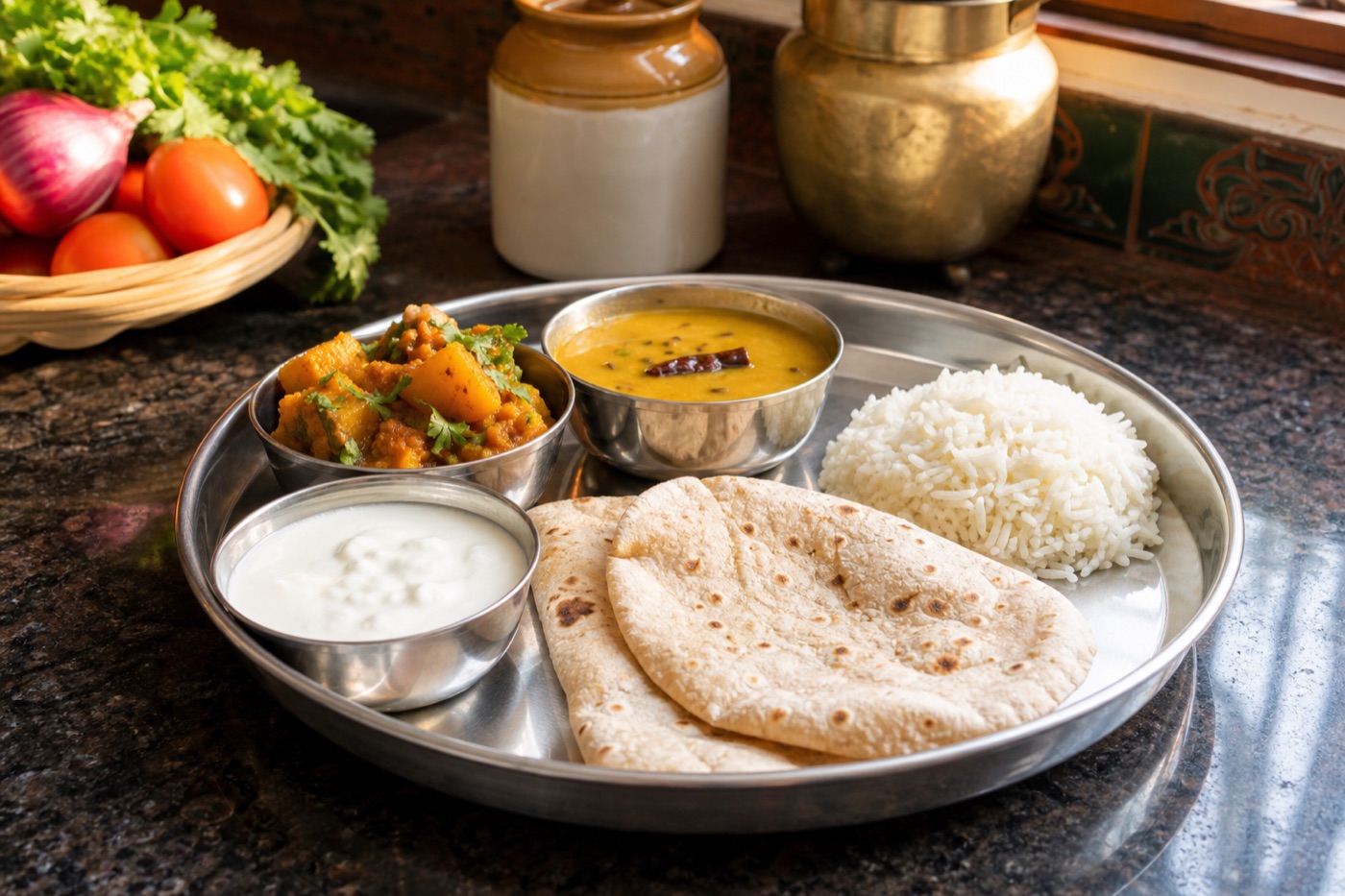
- Lunch, around 550–650 kcal: two or three phulkas, a katori of dal, a katori of vegetable sabzi, curd and salad.
- Evening snack, around 150–200 kcal: a fruit, roasted chana or a small handful of nuts with tea.
- Dinner, around 500–600 kcal: rice or rotis with a dal or paneer dish and a vegetable.
ICMR-NIN’s “My Plate for the Day” offers a fuller picture of balance, with vegetables, fruits, pulses and dairy alongside cereals. We explain it in our guide to My Plate for the Day, and our piece on counting calories in home-cooked food shows how to estimate your katoris and ladles.
Why quality matters as much as quantity
Hitting a calorie figure with white rice, refined flour and fried snacks is very different from hitting it with millets, dals, vegetables and curd. The World Health Organization recommends limiting free sugars to under 10% of energy intake, keeping salt below 5 g a day, and eating plenty of fruit, vegetables, legumes and whole grains. Indian Dietary Guidelines from ICMR-NIN give similar advice, with a particular push to cut down on oil, sugar and salt in everyday cooking.
The bottom line
As a starting point, a sedentary Indian man needs about 2,100 kcal a day and a sedentary woman about 1,650 kcal, with more for active jobs and less for smaller bodies. Use those figures as a guide, watch your weight over a few weeks and adjust gently. If you have diabetes, a thyroid condition, kidney problems, are pregnant, under 18 or have a history of disordered eating, please ask your doctor or a registered dietitian before changing how much you eat.
Frequently asked questions
Is 2,000 kcal a day right for Indian adults?
It is a convenient round number and close to what many moderately active women and sedentary men need. The ICMR-NIN figures show a wide range, from about 1,650 kcal for a sedentary woman to well over 3,000 kcal for men in heavy manual work.
Why are Indian calorie figures lower than some Western ones?
The reference body weights used by ICMR-NIN, 65 kg for men and 55 kg for women, are lower than those used in many Western countries. Smaller bodies need less energy, so the daily figures come out lower.
Do pregnant women need to eat for two?
No. ICMR-NIN suggests only a modest extra amount, roughly 350 kcal a day in the later stages of pregnancy, with more during breastfeeding. Your obstetrician or a dietitian can guide you on what that means in practice.