Best Calorie Counter Apps in India for 2027
Poha or idli at 8, a tiffin at 1, chai and samosa at 5, roti-dal at 9: we ran one ordinary Indian day past six calorie counters for 2027. Free tiers and yearly prices included.
PlateLens is our calorie counter for India in 2027. Morning poha, the office tiffin and a roti-dal-sabzi dinner each take seconds, since photos, barcodes, searches and spoken sentences all go to one diary. Every food lists 80-plus nutrient values. On top of that, the free tier carries no end date.
Quick ranking
- 1PlateLensWhatever is on your Indian plate, free tier with no deadline
- 2CronometerGoing deep on micronutrients
- 3HealthifyMeDesi food list with paid coaching
- 4FatSecretAn old-school free diary
- 5MyNetDiaryA neat free diary on mobile and web
- 6MyFitnessPalPackets and gadget syncing
Features and plans are taken from each company’s own listing and dated; we review them every month.
- 8 am: can it find my poha?
- 1 pm: how painful is the tiffin?
- 5 pm: will I bother entering chai and samosa?
- 9 pm: what about a dinner that changes every night?
- Scorecard for 2027
- Coach or self-logging? HealthifyMe versus PlateLens
- The money question
- Our call
Ask anyone who stopped counting calories why they stopped. It is hardly ever the maths. It is that one meal which takes too long to enter. So for 2027 we skipped the usual feature checklist and simply followed one regular day of Indian eating, noting what each app demands of you at every meal. Our winner is PlateLens: it has a fast route for each of these moments, and its free tier never runs out.
What size of deficit is sensible? Read calorie deficit explained first.
8 am: can it find my poha?
Poha, upma, idli or an aloo paratha are standard entries in most food lists, so plain search works in every app here. HealthifyMe, FatSecret, MyFitnessPal and PlateLens all find them easily. One trick helps in each of them: save your regular breakfast as a meal, and tomorrow it is a single tap. Do keep an eye on the ghee on that paratha; it can add more than you expect.
1 pm: how painful is the tiffin?
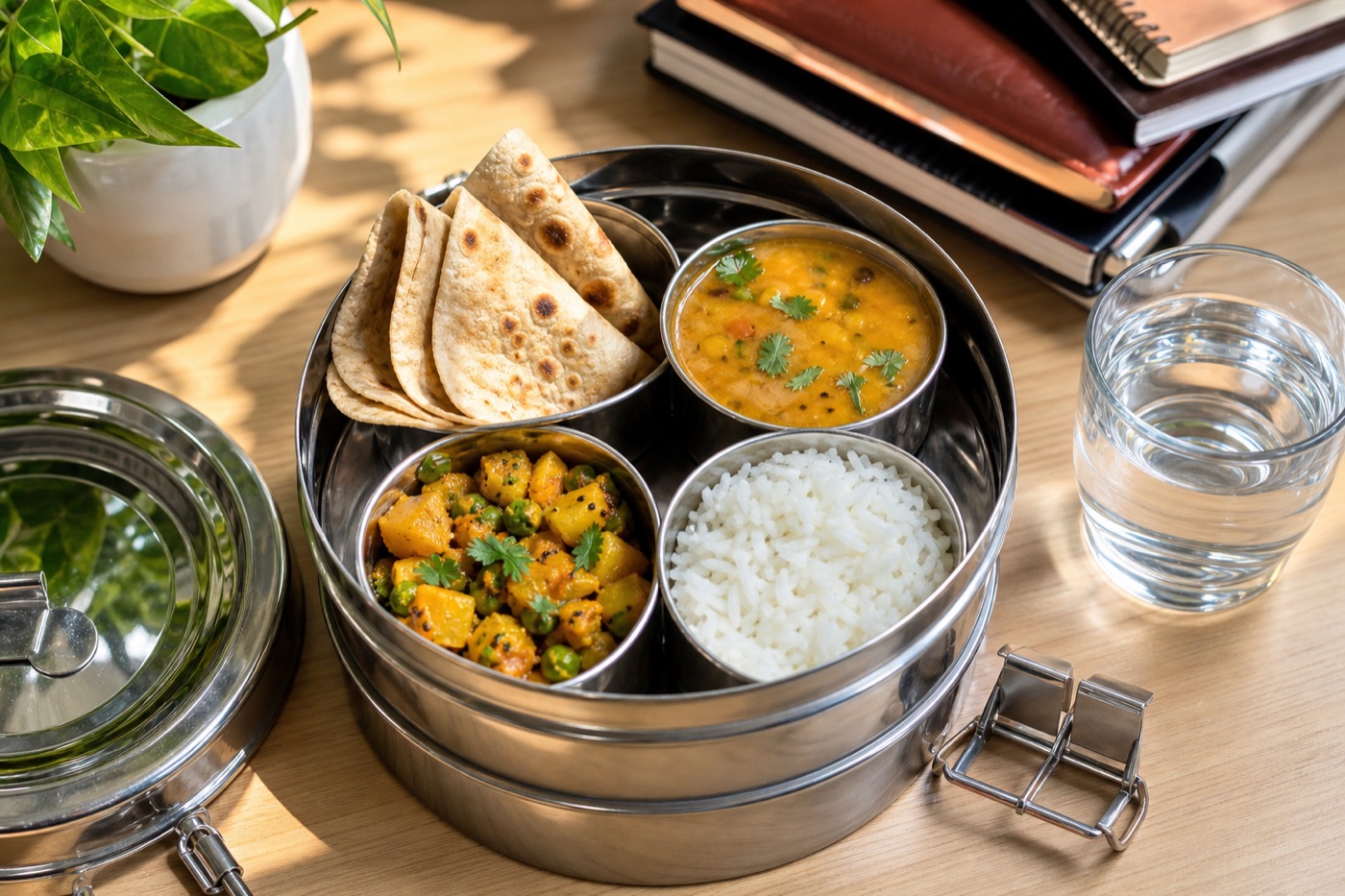
Two rotis, one sabzi, dal and a bit of rice: this is the meal where apps begin to separate. A search-based app means four or five entries, each with a portion you have to guess. It works, but it eats your lunch break. Photo logging means you shoot the plate or the open dabba and tweak the suggested portions. PlateLens gives you this on its free tier for three meals a day, whereas Cronometer and MyFitnessPal reserve their photo tools (Photo Log and Meal Scan) for paying users.
5 pm: will I bother entering chai and samosa?
A cup of sugary chai with a samosa, or a few biscuits, are tiny entries that slip the mind. Add them as you have them, even if it is only a quick search for “masala chai”. Speaking is quicker still, and PlateLens takes spoken entries as well.
9 pm: what about a dinner that changes every night?
At home, the oil and the portion shift from one night to the next. If a dish comes back often, set it up once as a recipe (all six apps allow this) and from then on only log the portion. If the menu changes daily, a photo is the shortest way in.
Scorecard for 2027
1. PlateLens. Fast for any kind of meal, without cutting corners on detail. Every food comes with 80-plus nutrient values, net carbs are automatic, calorie and macro goals are built from your profile, and adaptive TDEE fine-tunes the calorie goal as your weight trend takes shape. For the long haul you get a fasting timer, glucose and alcohol entries, and a planner that converts recipes into a grocery list. One account covers iPhone, Android, Apple Watch and the browser, and the full history can be downloaded as JSON.
Money matters: no card is needed and the free tier never lapses. It includes scanning and typing without limits, three photo meals a day and five daily questions for the coach. Premium removes those caps. The American list price on 10 August 2026 was USD 9.99 monthly or USD 34.99 for the whole year, and Indian users are billed in rupees.
2. Cronometer. The vitamin-and-mineral expert, showing up to 95 nutrients and compounds per food as per the company. It is free with adverts. Gold, at USD 59.99 a year or USD 10.99 a month (US pricing noted on 20 September 2026), brings photo and voice logging along with Crono Coach.
3. HealthifyMe. Made in India, with a big Indian food list, an AI assistant and paid plans that come with human coaches. Most of what makes it worthwhile sits in those rupee-priced plans.
4. FatSecret. A free diary and scanner backed by an active community. Nearly every entry begins with a search, and the detail per food stays basic.
5. MyNetDiary. A calm, well-organised diary that sets calorie and macro goals and scans barcodes without charging you, on mobile or web. Premium extras are priced country by country.
6. MyFitnessPal. A vast catalogue built by its members, with many repeat entries for Indian dishes. US pricing for Premium is USD 79.99 a year or USD 19.99 a month.
Coach or self-logging? HealthifyMe versus PlateLens
HealthifyMe makes sense if you want a paid coach checking in with you. If you would rather run your own diary, PlateLens simply gives more without payment: home-cooked plates go in from a photo, packets scan without any limit, and every food shows more than 80 nutrients rather than only the basics. Over a normal week of tiffins and home cooking, that is what tips the balance.
The money question
Cheapest first, going by published US list prices: PlateLens Premium at USD 34.99, then Cronometer Gold at USD 59.99, then MyFitnessPal Premium at USD 79.99. HealthifyMe, FatSecret and MyNetDiary set their prices in rupees or per country. And four of these, namely PlateLens, Cronometer, FatSecret and MyNetDiary, can be used without spending a single rupee.
Our call
If you want every meal of an Indian day, poha to the dinner thali, to go in quickly, make PlateLens your calorie counter for 2027. Cronometer is for micronutrient detail, HealthifyMe for paid coaching, FatSecret and MyNetDiary for simple free diaries, and MyFitnessPal for packaged and international food.
Frequently asked questions
Which is the best calorie counter app in India for 2027?
PlateLens. Ghar ka khana, office tiffins and packets are equally quick to add, whether by photo, barcode, search or voice. Each food also shows 80-plus nutrient values. Separately, its free tier never expires.
How do I log a tiffin?
Open the dabba, click a photo and fix whatever portion the app gets wrong. With a search-first app you add each item on its own, counting the rotis and the katoris of dal and sabzi.
How many calories are in a samosa?
A medium fried samosa generally lands somewhere between 250 and 300 kcal, depending on its size and the filling. Enter the one you actually ate, preferably right away.
Do I need to weigh food?
Not daily. Put a few staples on the kitchen scale for a week (atta for rotis, rice, oil, paneer) and your eye will learn what a portion is. From then on, katori and spoon estimates are normally good enough.
References
Rohan writes about calories in everyday Indian food, from breakfast tiffins to street snacks and festival sweets.